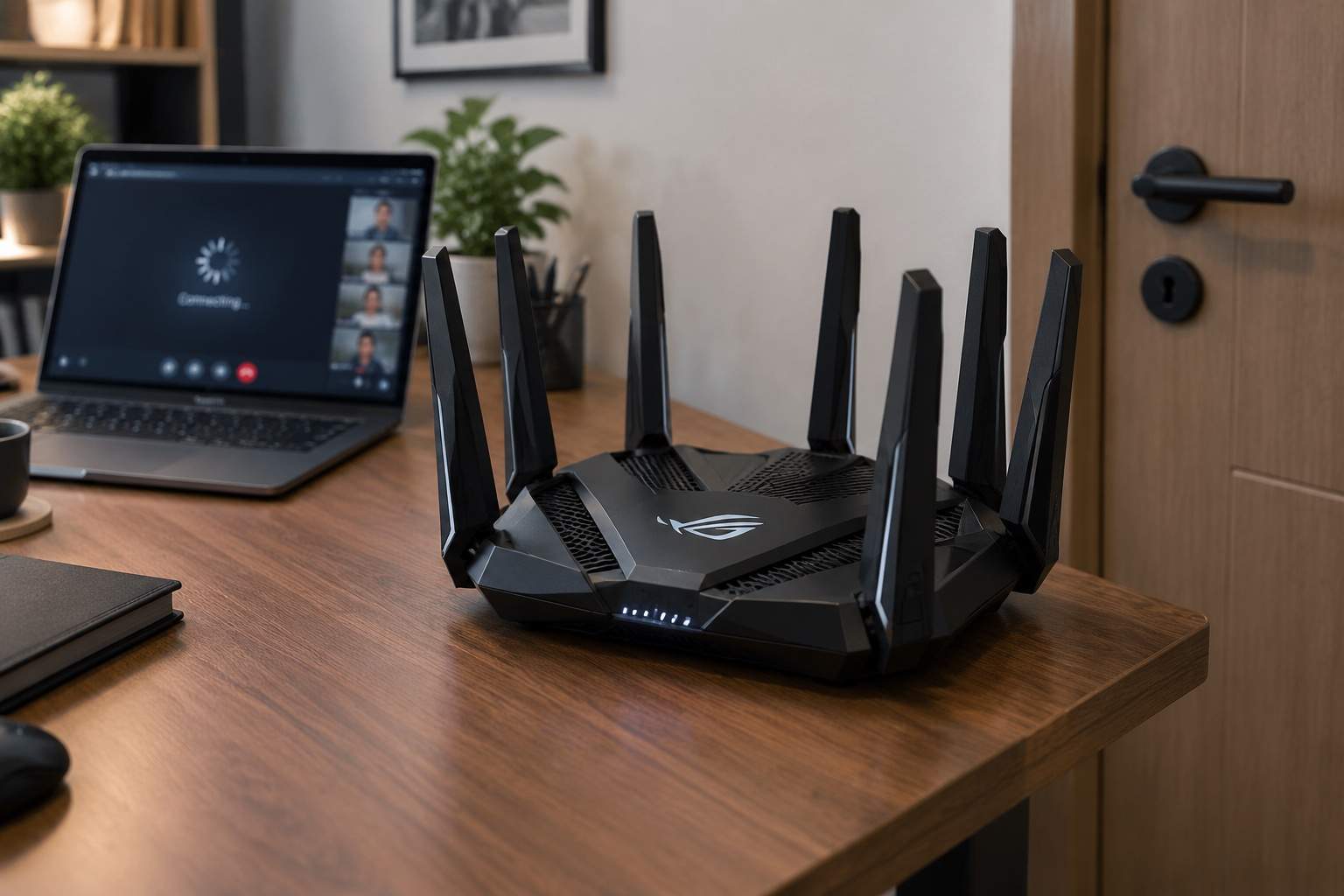
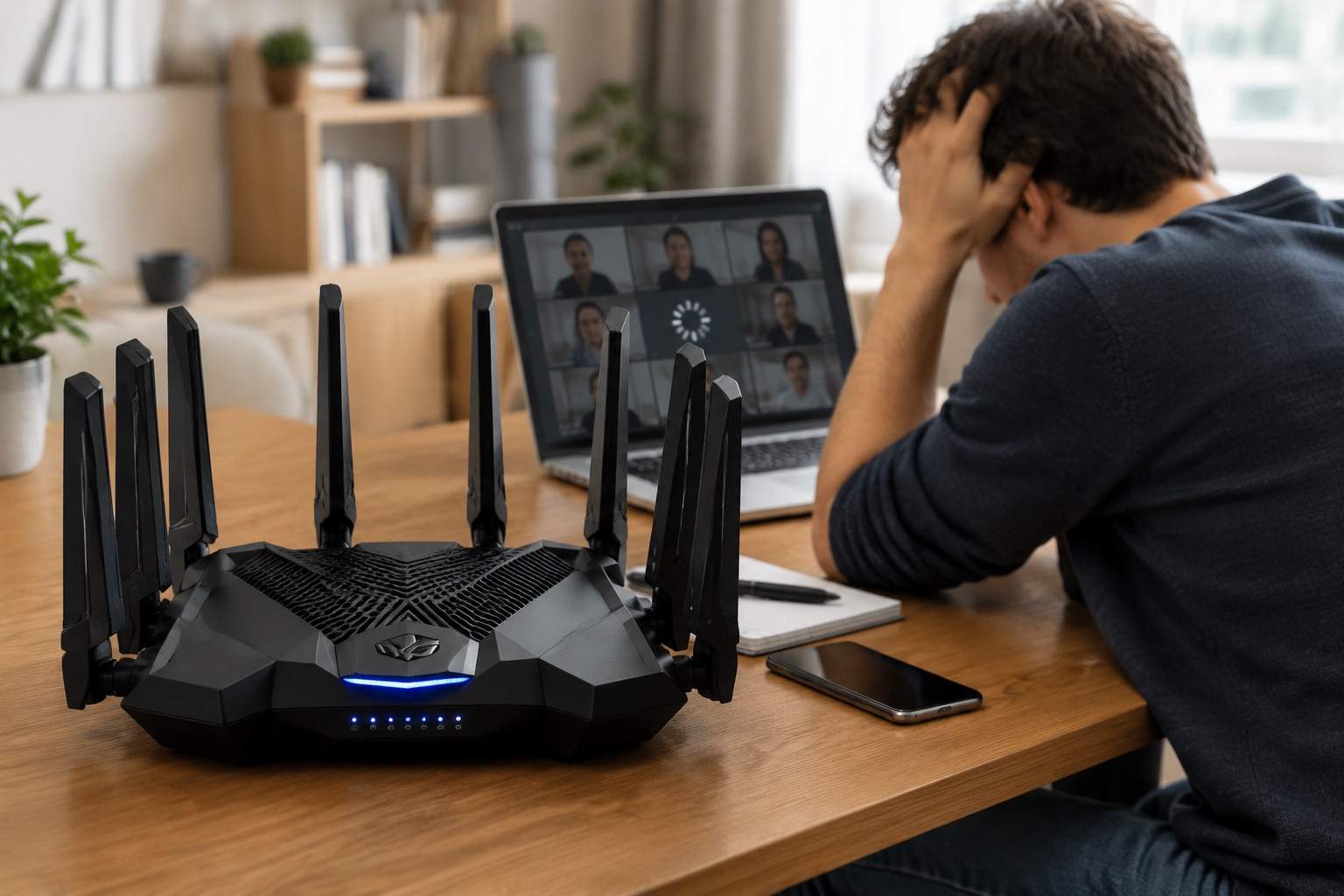
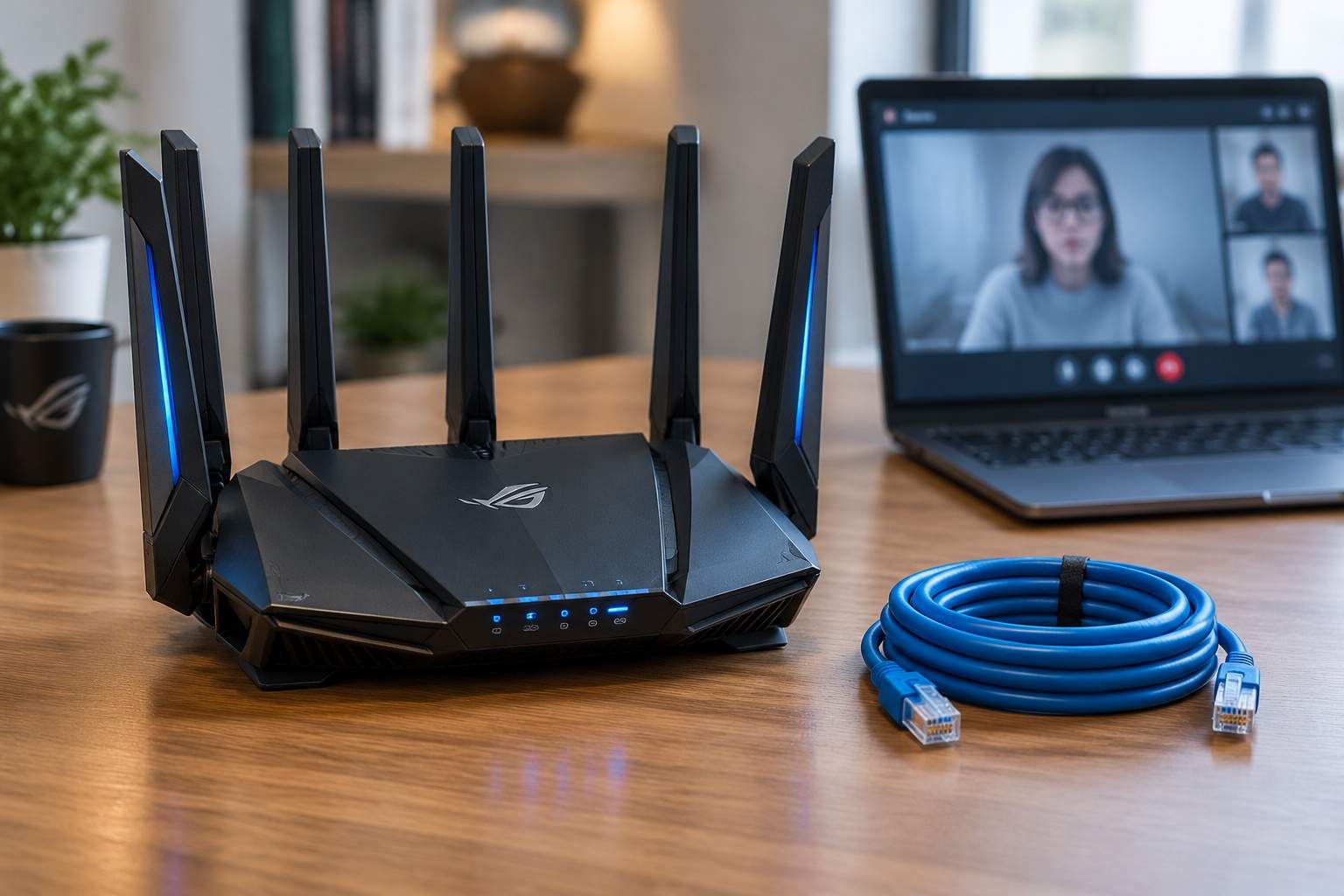
You are in the middle of a high stakes Zoom presentation from your bedroom office and even though your laptop shows full Wi-Fi bars the screen freezes and the audio cuts out the moment someone else in the house starts streaming Netflix. You spent five hundred dollars on a top tier mesh system with eight antennas and a sleek design yet the lag remains. As someone who has spent two decades in hardware labs testing these boxes I can tell you the problem is not your internet speed but the very equipment you bought to fix it.
The biggest lie in consumer networking is that full bars equal a perfect connection. Those bars only measure the signal strength between your laptop and the nearest plastic node. They tell you nothing about how that node is talking to the main router. In a wireless mesh setup every node acts like a relay runner. If the first runner is gasping for air the baton arrives late no matter how fast the second runner is. This is what we call wireless backhaul and it is the hidden killer of productivity.
When you use a wireless mesh system your data has to hop through the air twice. Once from your laptop to the node and once from the node to the base station. This process doubles your latency jitter. In my testing a direct wired connection typically shows a ping of 2ms with zero fluctuations. A high end wireless mesh node in a typical suburban home often jumps from 15ms to 100ms the moment a microwave turns on or a neighbor starts a download. That jitter is what makes your voice sound like a robot during a professional call.
Many people fall for the Wi-Fi 7 marketing buzz because they think more bandwidth fixes lag. It does not. Bandwidth is the width of the highway while latency is the speed limit and the traffic lights. You can have a ten lane highway but if there is a red light every fifty feet you will still be late for work. Signal interference from walls and furniture eats wireless packets for breakfast. A brick wall can absorb 50 percent of a 5GHz signal and the newer 6GHz bands used in premium gear are even worse at penetrating physical objects.

The professional solution is much uglier and significantly cheaper than a mesh kit. It involves a twenty dollar Ethernet cable. If you can get a physical wire from your router to your office you have won the battle. If you cannot drill holes a hidden flat Ethernet cable run under the baseboards or a pair of Powerline adapters can outperform a five hundred dollar wireless system by providing a stable backbone. By connecting a simple wireless access point to that wire you create a dedicated bubble of interference free internet exactly where you work.
Mesh systems are designed for convenience not for performance. They are perfect for people who just want to browse Instagram in the garden or check emails in the kitchen. They are a disaster for anyone whose paycheck depends on a stable video feed or whose sanity depends on low ping gaming. If you are a renter who absolutely cannot run a wire look for a mesh system that has a dedicated backhaul band but be prepared to pay a premium for a solution that is still inferior to a cheap piece of copper.
Hardware design has become a beauty contest where we prioritize hidden antennas and glowing LEDs over physical stability. Most premium mesh nodes are thermally constrained because they lack proper venting to maintain their aesthetic. When these units get hot the internal processor throttles and your packets get dropped. A dedicated access point looks like a boring smoke detector but it is built to handle constant traffic for years without a reboot.
Stop chasing the dream of a wireless utopia through expensive hardware upgrades. Real efficiency comes from removing the variables that cause instability. Trade the fancy mesh nodes for a single reliable router and one strategically placed wire. Technology should be invisible and silent. When your network just works because it is built on solid physics rather than marketing promises you can finally focus on your work instead of your router settings.