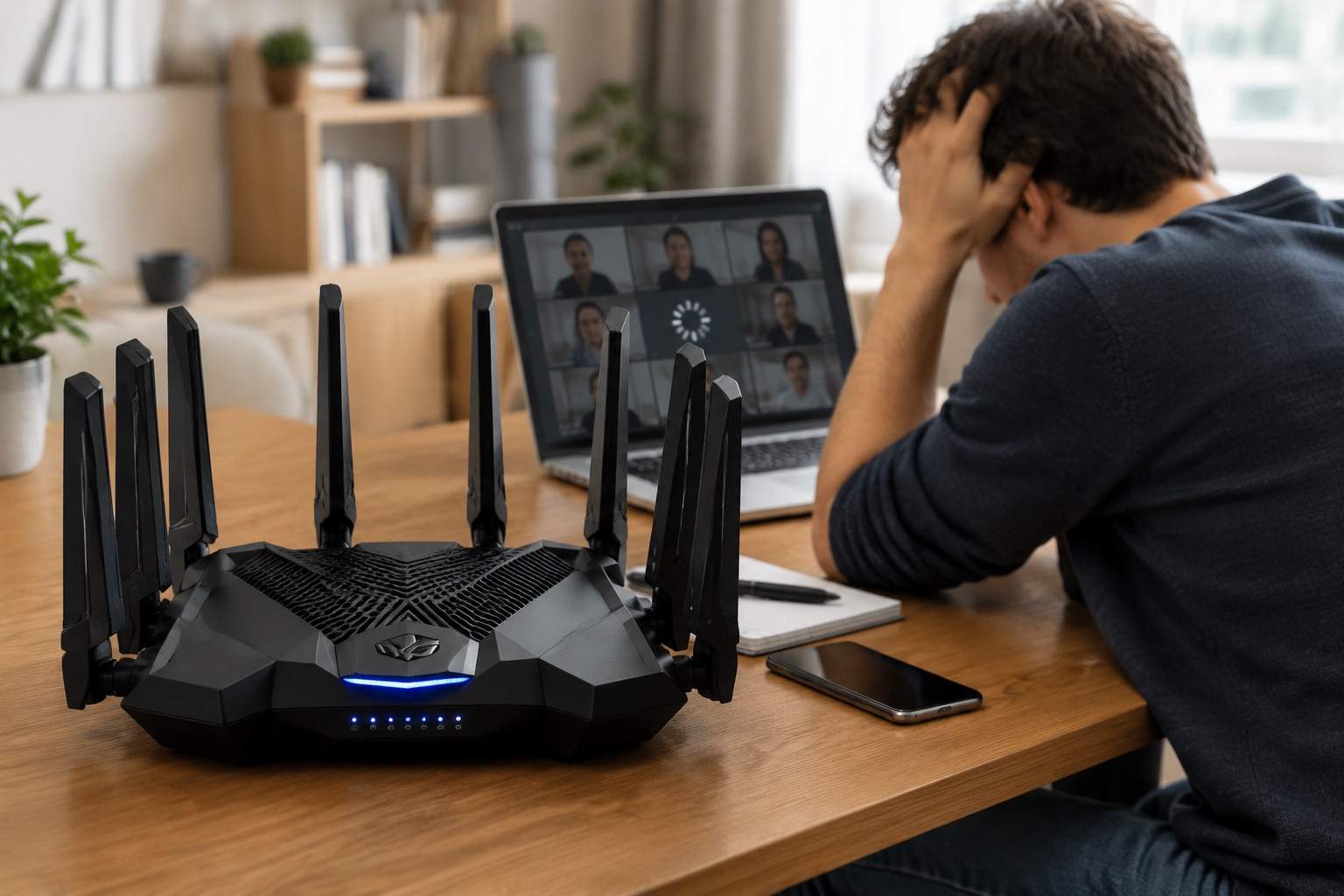
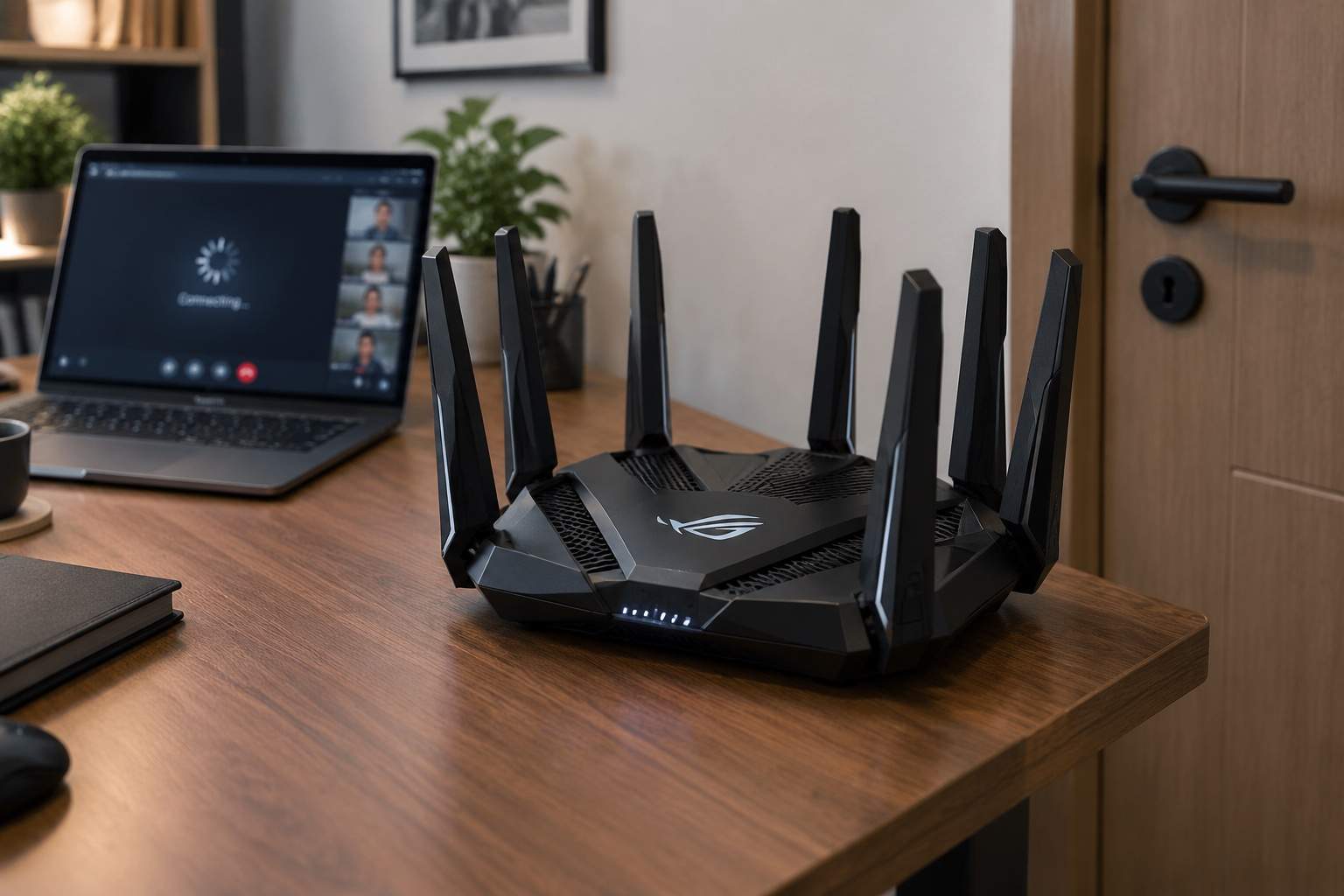
You are sitting in your home office, looking at a frozen frame of your boss’s face while the audio sounds like a robot drowning in a bathtub. In the next room, your family just started a 4K stream. You glance at that 500 dollar Wi-Fi 7 beast on your shelf, glowing with its eight antennas like a futuristic spider, and wonder where your money went. As a veteran hardware engineer, I see this every day. We are sold the dream of wireless freedom, but we are frequently fighting the laws of physics with a wallet instead of a brain.
Wi-Fi 7 is a marvel of engineering, introducing features like MU-MIMO and OFDMA that act like highly efficient traffic controllers. In a vacuum, it is incredible. But your apartment is not a vacuum. It is a maze of drywall, copper pipes, and neighbors’ overlapping signals. When you move to the 6GHz band for those advertised speeds, you are using a signal so fragile that a single thick door can cut your throughput by half. This is called signal attenuation, and no amount of marketing spend can fix how radio waves interact with solid matter.
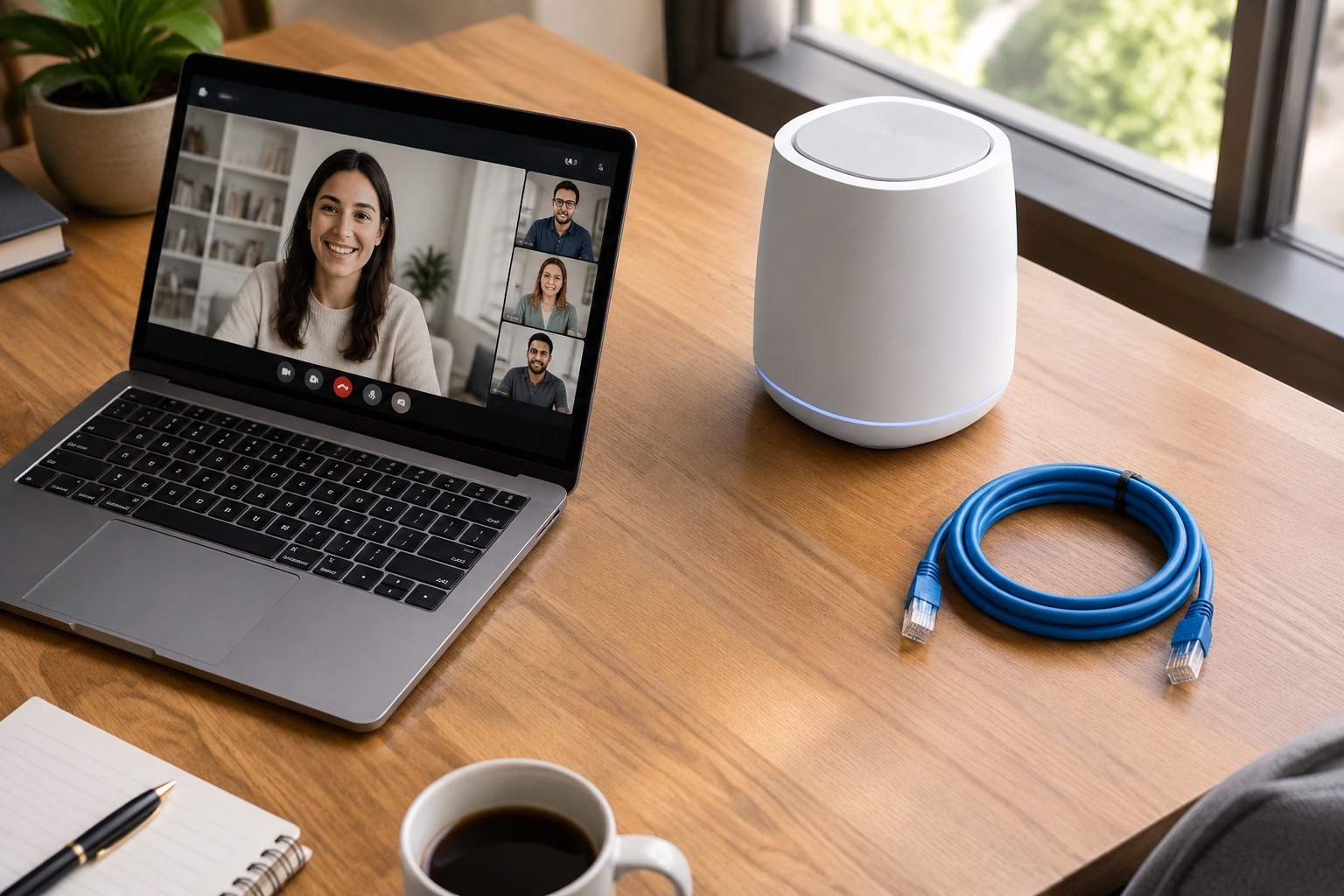
Compare this to a 20 dollar Category 6a cable. While your router is busy recalculating data packets lost to interference, the cable is a dedicated, private highway. In our lab tests, a high-end wireless connection rarely maintains a jitter variance below 15 milliseconds in a crowded residential building. A physical wire stays under 2 milliseconds. For a professional video call or competitive gaming, that 13-millisecond difference is the gap between looking like a pro and looking like you are dialing in from Mars.
The industry loves to talk about theoretical speeds of 40 Gbps. But for the remote worker, speed is not the bottleneck; consistency is. Even with OFDMA slicing up frequencies to serve multiple devices, the airtime is shared. When the vacuum cleaner, the microwave, and the neighbor’s baby monitor all scream in the same frequency range, your expensive router has to wait its turn. The wire never waits. It provides a full-duplex connection, meaning it sends and receives at the same time without blinking.
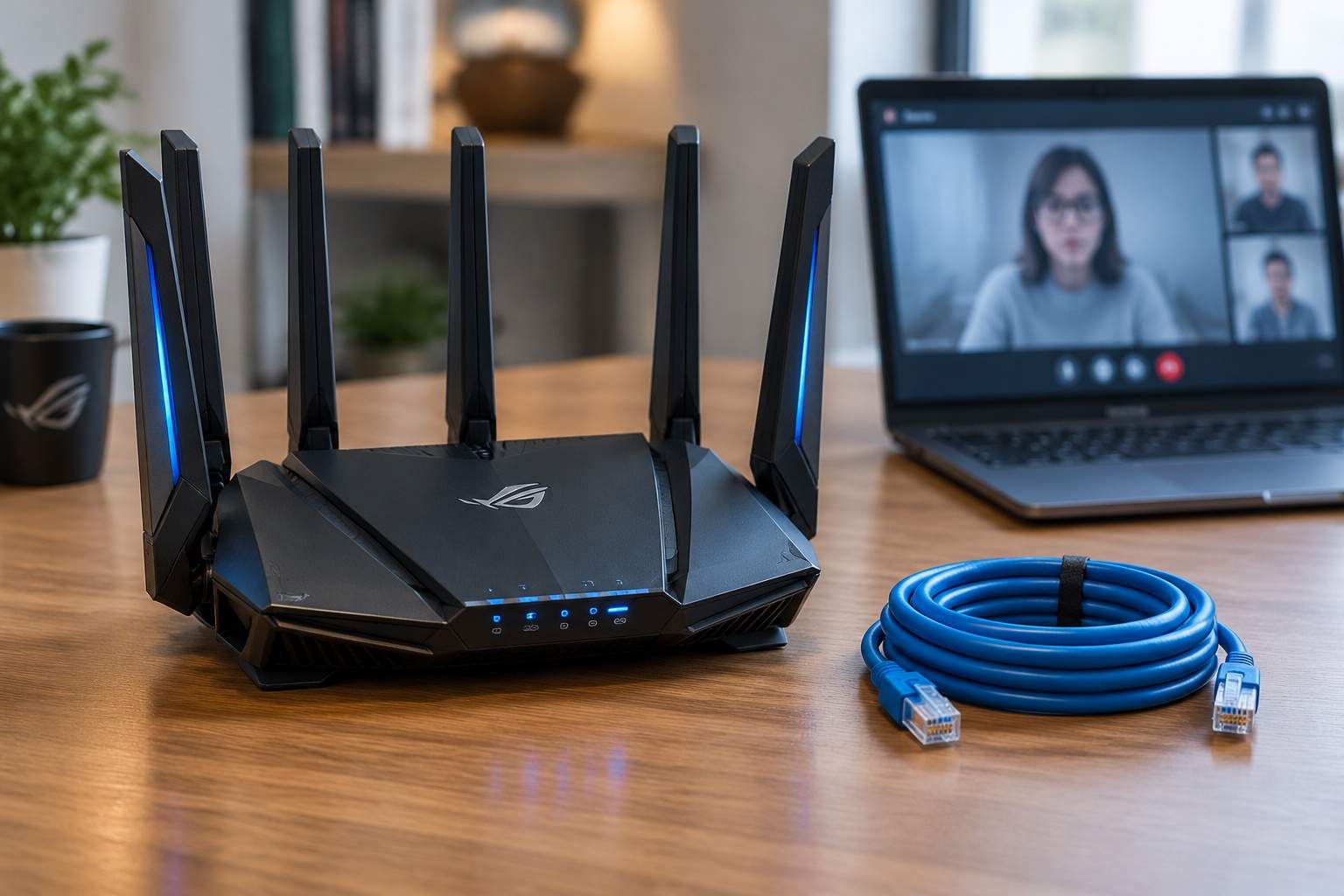
However, I am not telling you to throw the router away. You cannot plug a cable into your smartphone or a tablet while walking to the kitchen. Wi-Fi is for consumption; wires are for production. If your job depends on a stable connection, the smart move is using that expensive router as a hub for an ethernet backhaul. This means running a wire to your most important rooms and plugging in access points. You get the mobility of wireless with the backbone of a professional data center.
Design-wise, modern flagship routers are massive. They take up significant desk space and often require heavy power bricks. A thin Ethernet cable can be tucked under a carpet or run along a baseboard, virtually invisible. The material cost of a cable is just copper and plastic, which is why it costs less than a lunch special, yet it delivers 100 percent of the speed you pay your internet provider for, every single second.
If you are a casual user browsing social media on a couch, the flagship router is a luxury that makes life slightly smoother. But if you are a creator, a trader, or a remote executive, relying solely on those antennas is a gamble. The best upgrade you can buy for your home office this year is not a new mesh system with more lights. It is a long, boring, plastic-coated string of copper that guarantees your data actually arrives on time. Tech should serve you, not leave you troubleshooting during a keynote.