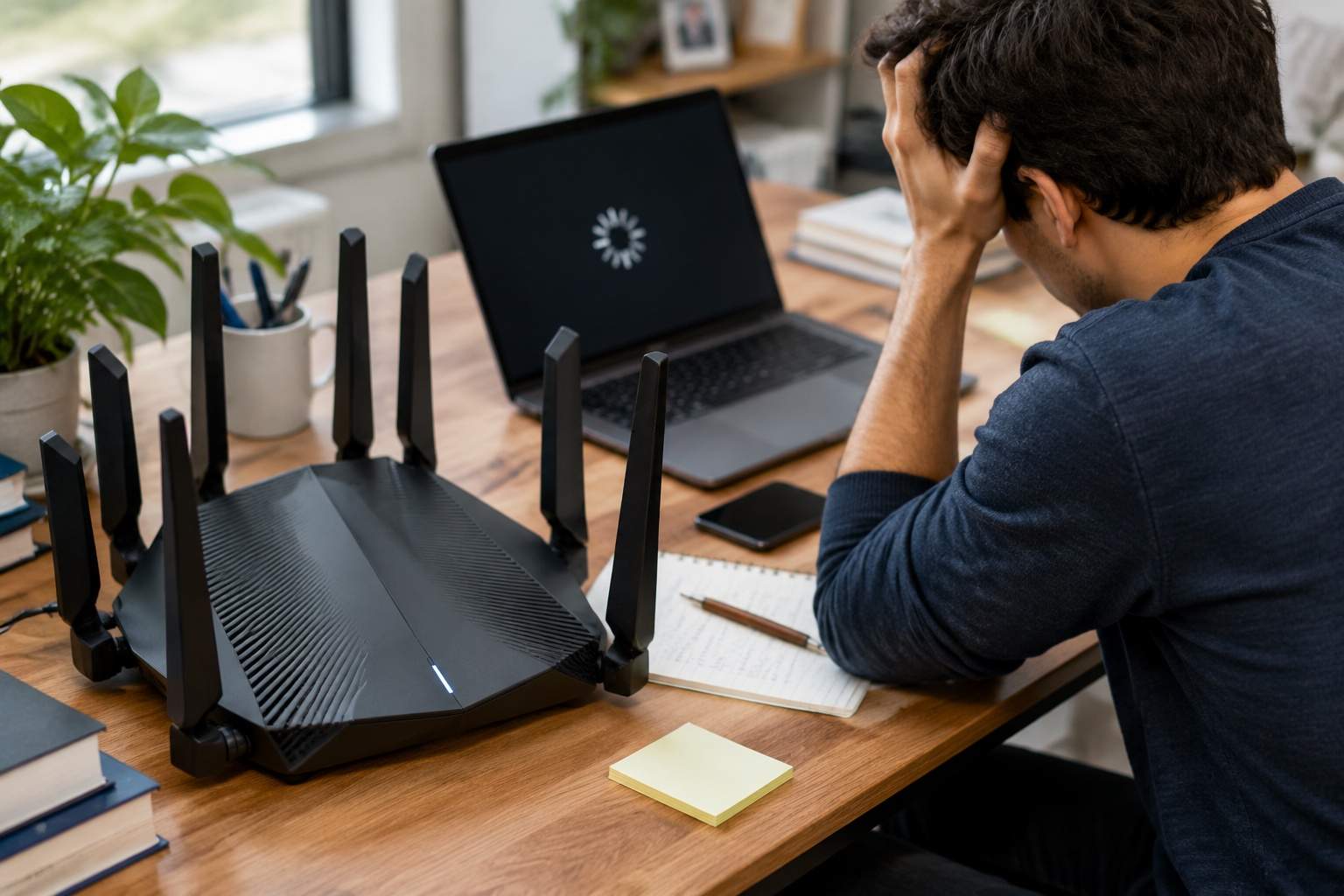
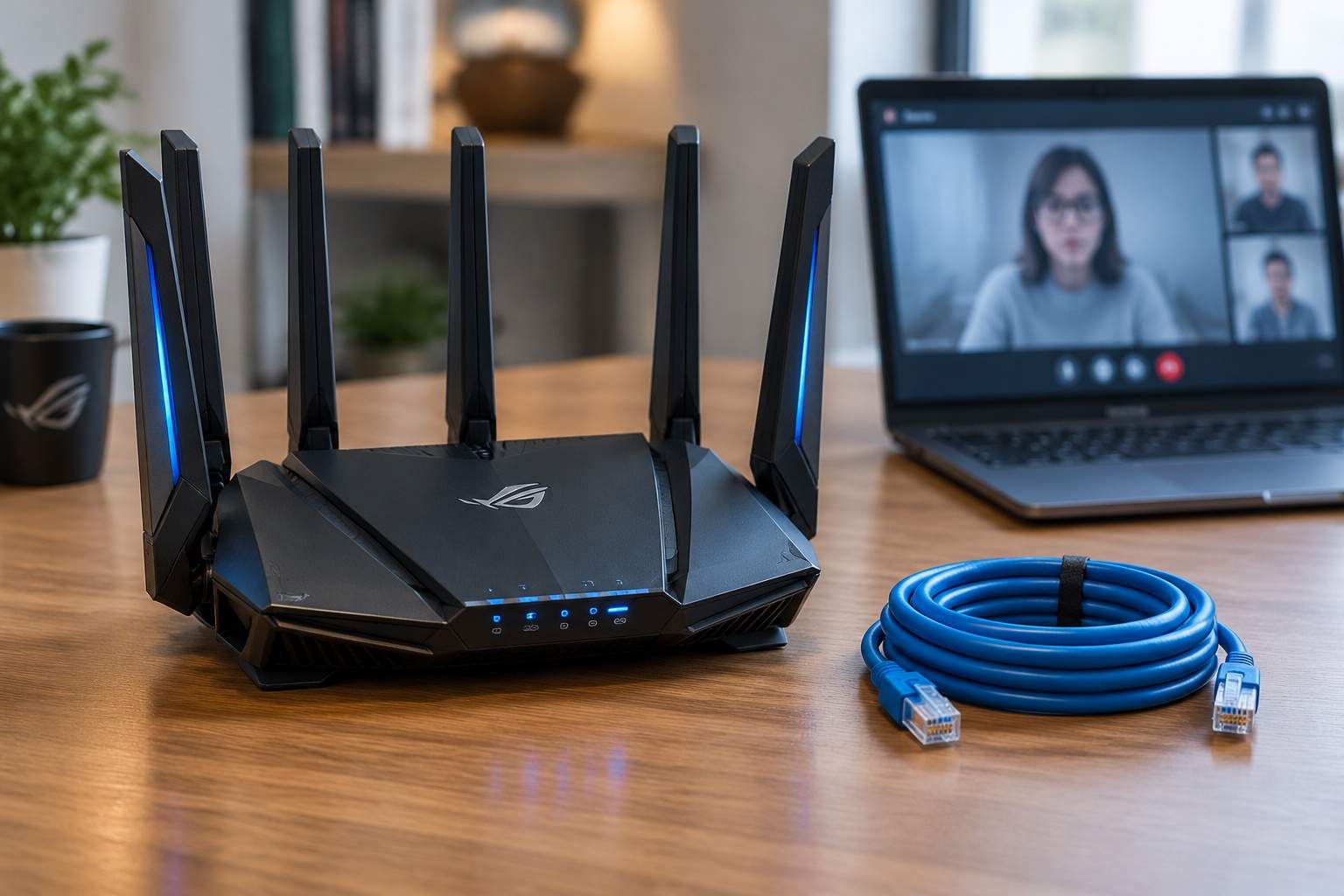
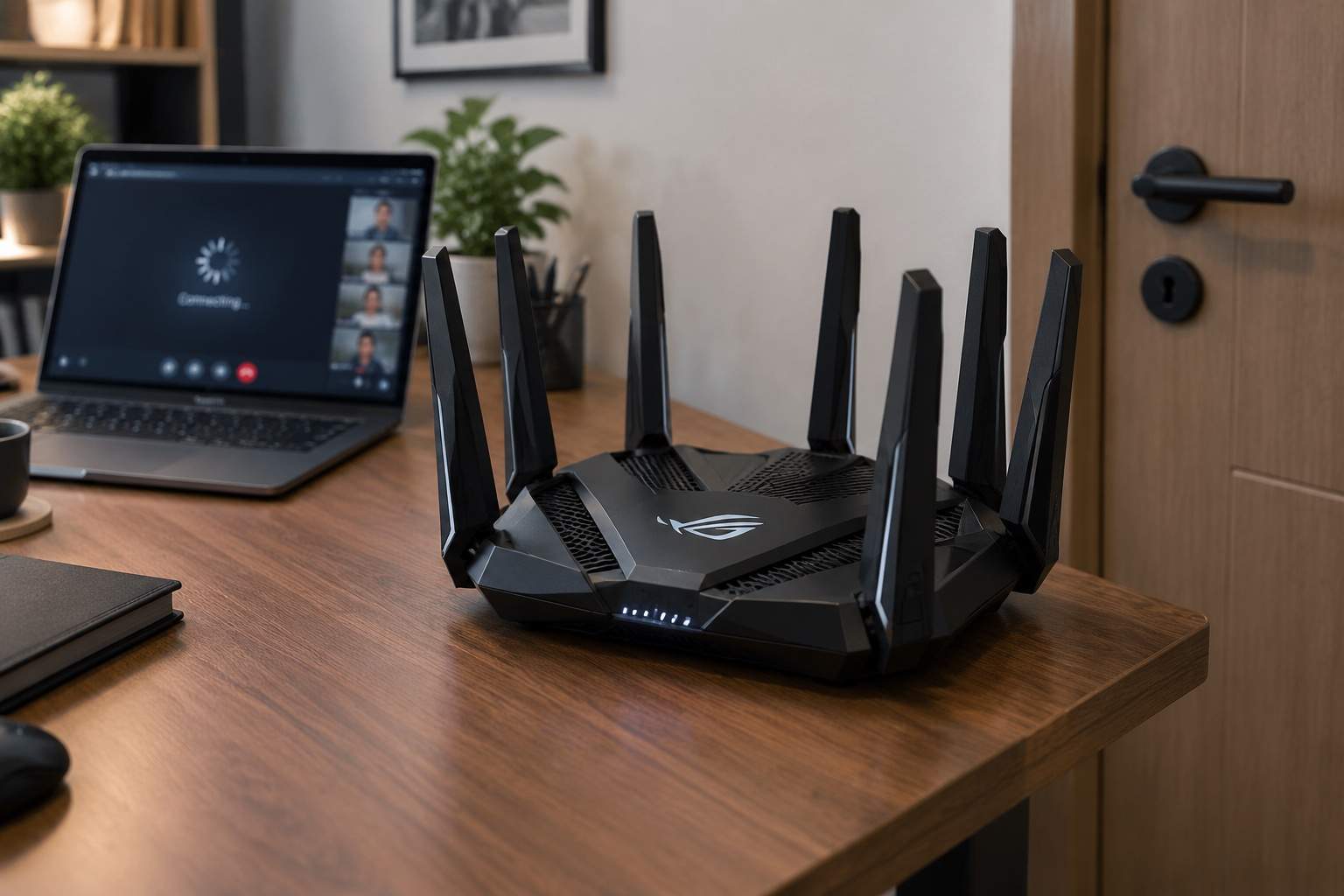
You just dropped three hundred dollars on a Wi-Fi router that looks like a robotic spider upside down. It has eight antennas, glowing LED lights, and a box that promises speeds faster than a NASA downlink. Yet, the moment you step into your home office and close the door for a high-stakes Zoom call, your video freezes. You look at your phone and see four full bars of signal. This is the great lie of modern networking: signal strength is not the same as signal quality.
As an engineer who has spent decades looking at supply chains, I can tell you that those extra antennas are often the equivalent of adding more exhaust pipes to a car with a four-cylinder engine. They look aggressive, but they do not change the fundamental physics of your apartment. Most consumer devices, like your iPhone or MacBook, only have two antennas inside. Your expensive router can scream with eight voices, but your laptop can still only hear two of them.
The "full bars" you see on your screen represent the amplitude of the signal, essentially how loud the router is shouting. But in a modern home filled with smart fridges, Bluetooth speakers, and your neighbor’s competing Wi-Fi, shouting louder just creates more noise. This is called signal interference. When a router tries to "punch through" a wall using raw power, the signal bounces off the studs and drywall, creating echoes. Your devices then have to spend precious milliseconds sorting out the real data from the noise. This is why your gaming router feels fast when you are standing next to it but lags during a simple video call one room away.
Let’s look at the data. A standard 5GHz signal loses about 50 percent of its speed for every single interior wall it passes through. If you are two rooms away, you are lucky to get 25 percent of the advertised speed, regardless of how many antennas are on the box. The real culprit behind your choppy video is actually something we call bufferbloat. High-end gaming routers often prioritize raw throughput over consistent delivery. They wait to fill up a "bucket" of data before sending it. For a 4K movie, that is fine. For a live conversation where every millisecond counts, it is a productivity killer.
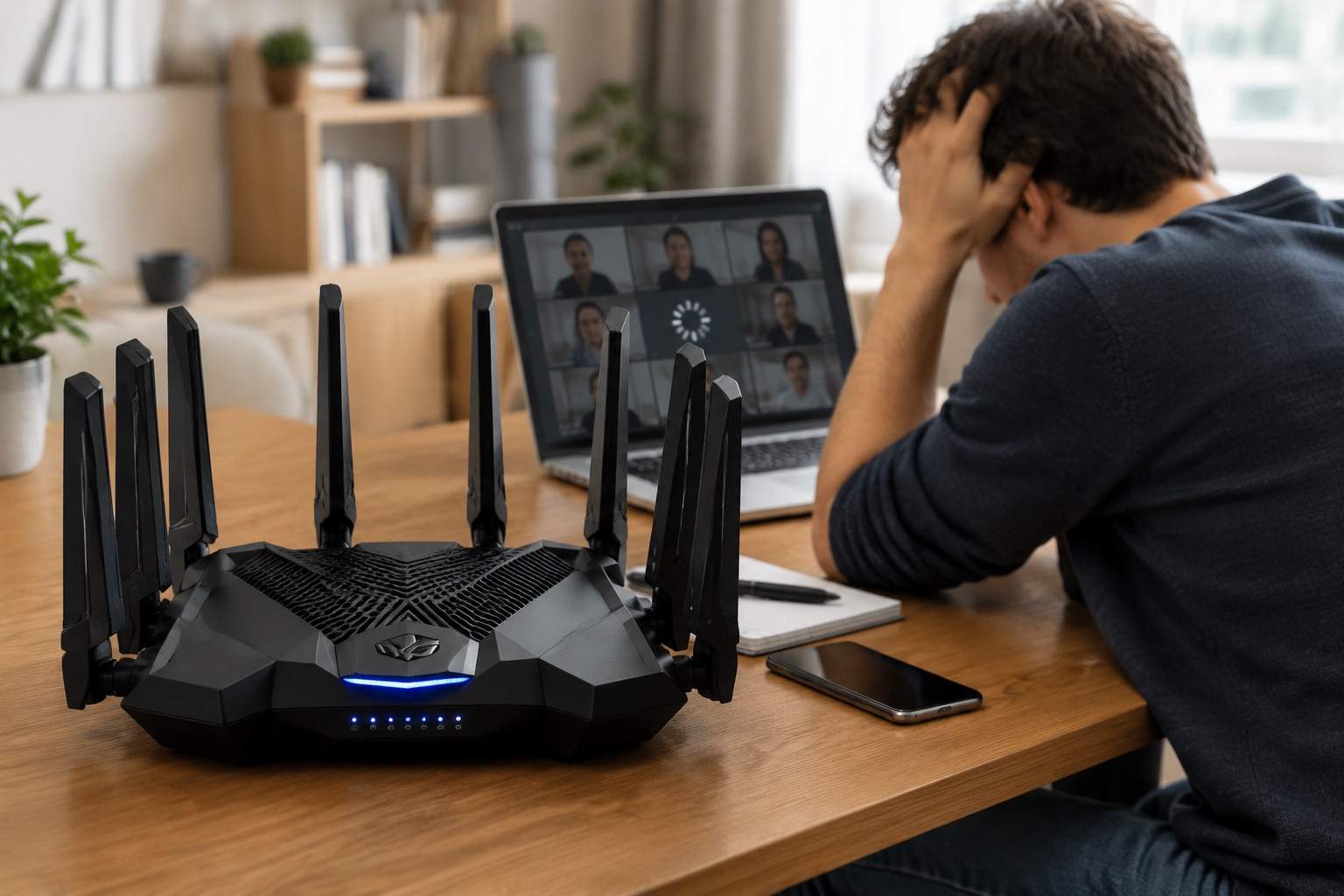
The industrial design of these high-end routers is also a trap. They are built to look impressive on a shelf, but they are single-point failures. If you live in a space larger than 800 square feet, a single "super-router" is the wrong tool for the job. You are better off with a distributed system. Think of it like lighting a house. You would not put one massive 1,000-watt searchlight in the living room and expect it to light the bathroom down the hall. You use smaller, well-placed lamps.
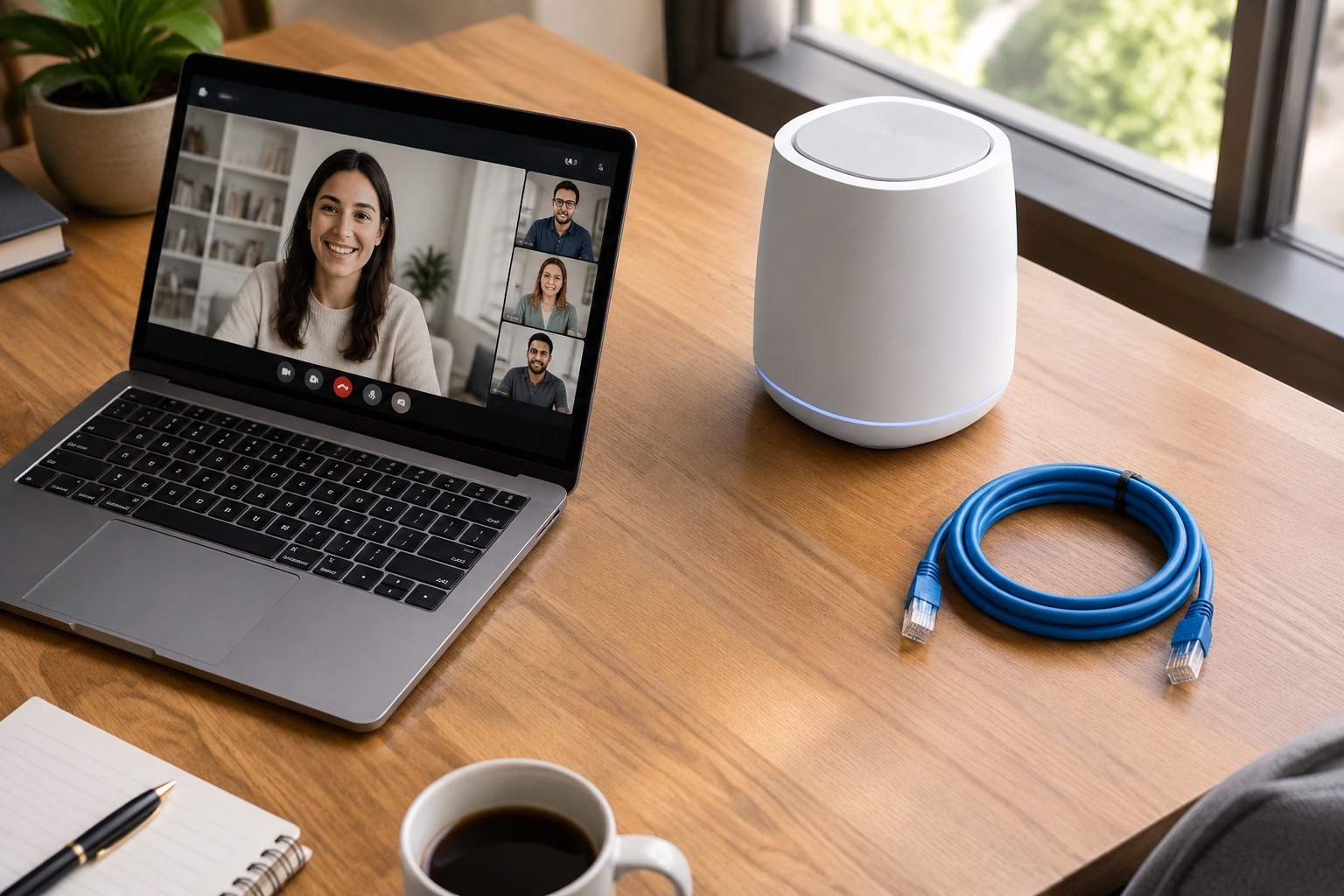
This is where a Wireless Mesh System or a dedicated Wireless Access Point setup becomes the efficiency mentor for your home. These systems use several smaller units that talk to each other. The gold standard, which I recommend to anyone who works for a living, is using an Ethernet backhaul. This means you run a physical cable to the second unit. This removes the "wall tax" entirely. By using a physical wire to move data between rooms, the Wi-Fi signal only has to travel five feet from the ceiling to your laptop, rather than thirty feet through two walls and a closet.
The pros of the $300 gaming router are limited to people living in studio apartments with fifty wireless gadgets. They are great at handling many simultaneous connections in a single open space. However, the cons are significant for the professional. They take up massive desk space, consume more power, and provide a false sense of security with those signal bars. They are built for marketing, not for the physics of your home.
If you want to actually improve your work life, stop looking for more antennas. Look for a system that supports Wi-Fi 6E on a wired backbone. The 6GHz band is like a private highway with no traffic, but it has the shortest range of all. To make it work, you need the signal source in the room with you, not hidden behind a television in the living room.
When you shop, ignore the "Gaming" branding. Look for hardware that emphasizes "seamless roaming" and "wired backhaul." A simple, white plastic box tucked discreetly on a shelf is often twice as effective as a glowing black beast with antennas. The goal is not to have the most powerful signal; the goal is to have the shortest distance between your device and the internet. Technology should be invisible. If you have to think about your router, it has already failed you.