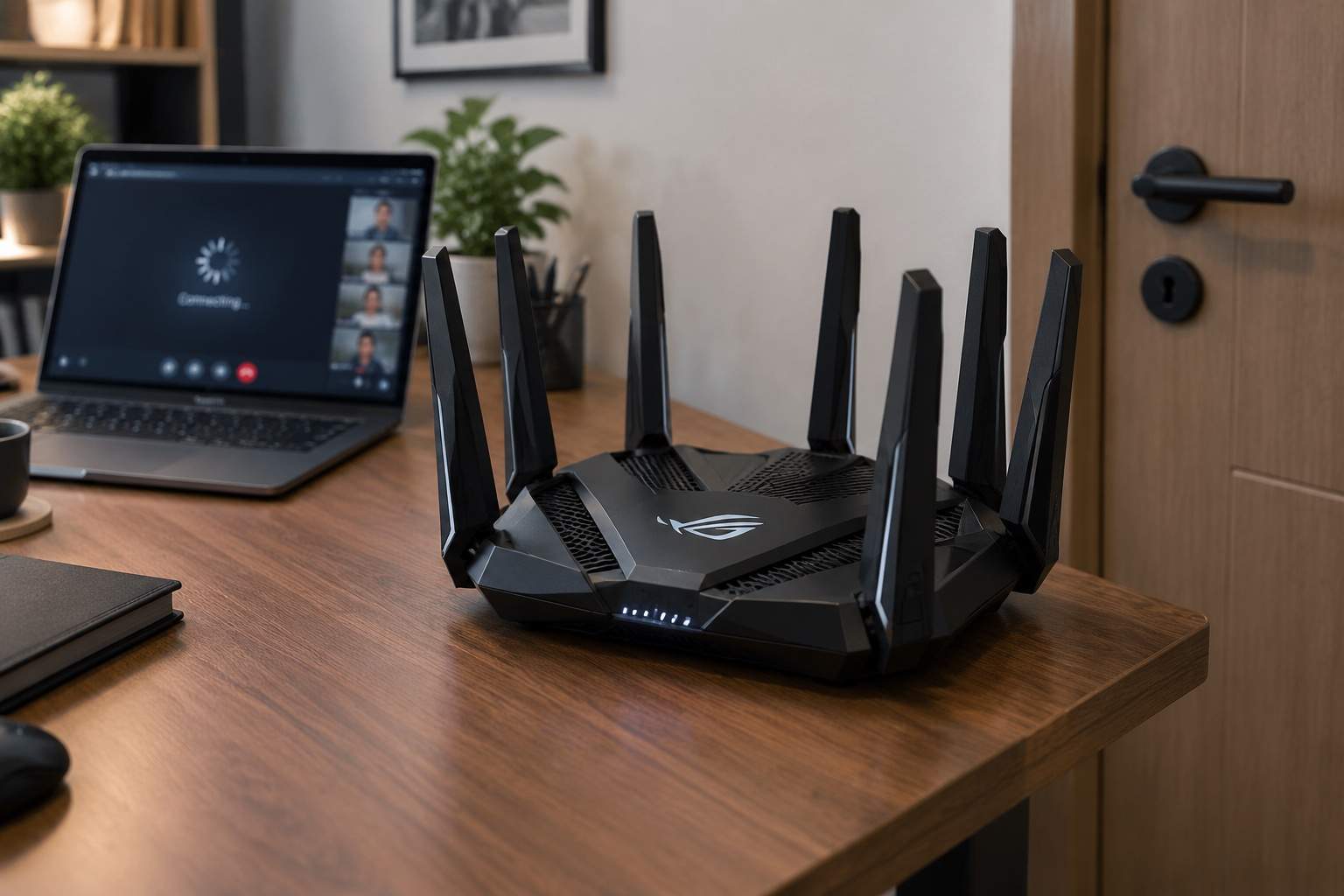
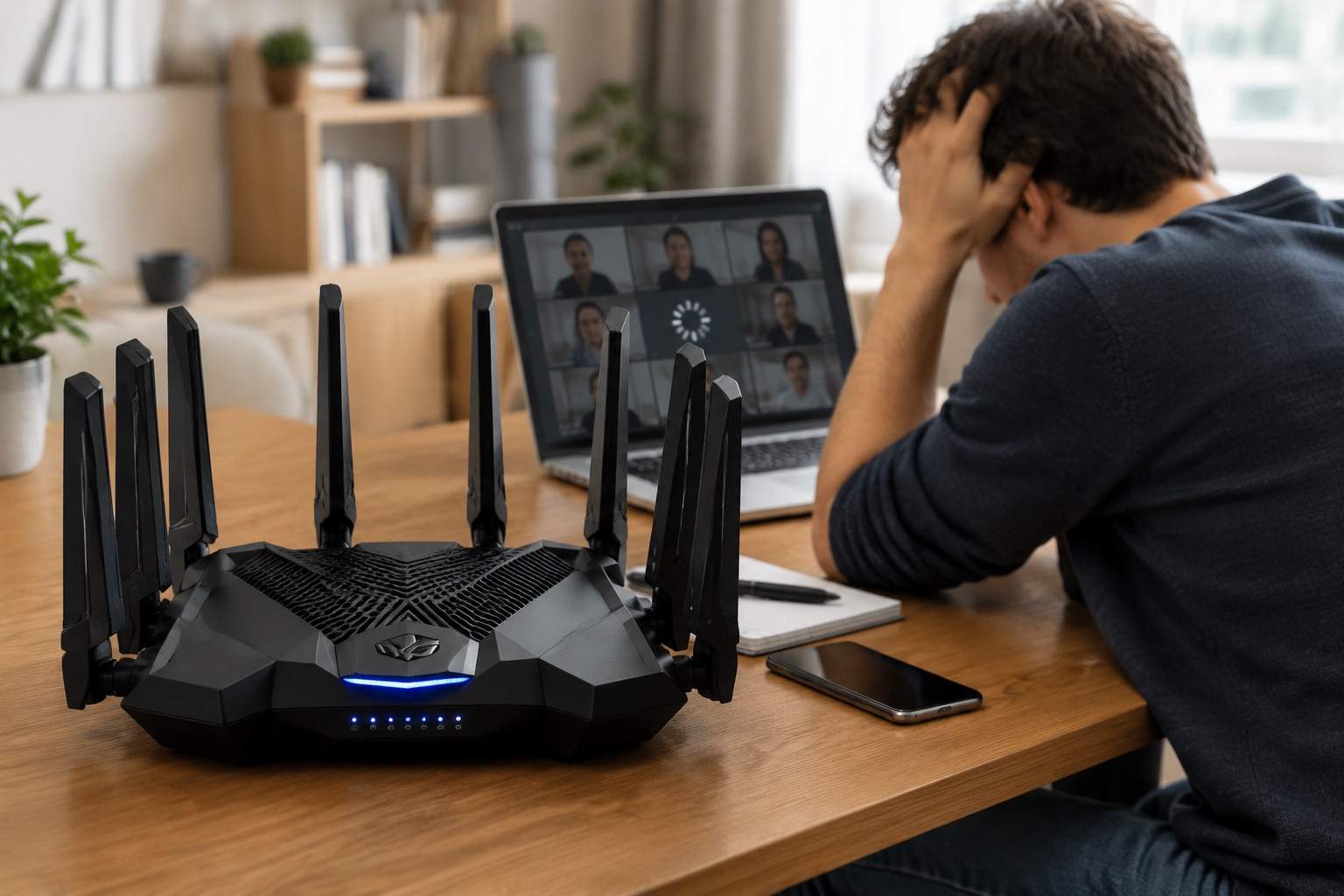
You have probably seen those high-end routers that look like an upturned mechanical spider with eight or twelve antennas. The marketing promises wall-penetrating speeds and enough bandwidth to stream 8K video in the middle of a forest. You spent three hundred dollars yet your Zoom call still drops the moment you walk into the bathroom. As a former hardware engineer I can tell you that you are not buying a better signal. You are buying a very expensive piece of desk art that is losing a fight against basic physics.
The biggest lie in consumer networking is that more antennas equal more range. In reality government regulations limit how loud a router can broadcast. Whether your router cost thirty dollars or three hundred they are all capped at the same maximum transmission power. Adding more antennas is like adding more megaphones to a person standing in one spot. It might help the router hear a faint signal better but it does not let the signal magically phase through two layers of reinforced concrete.
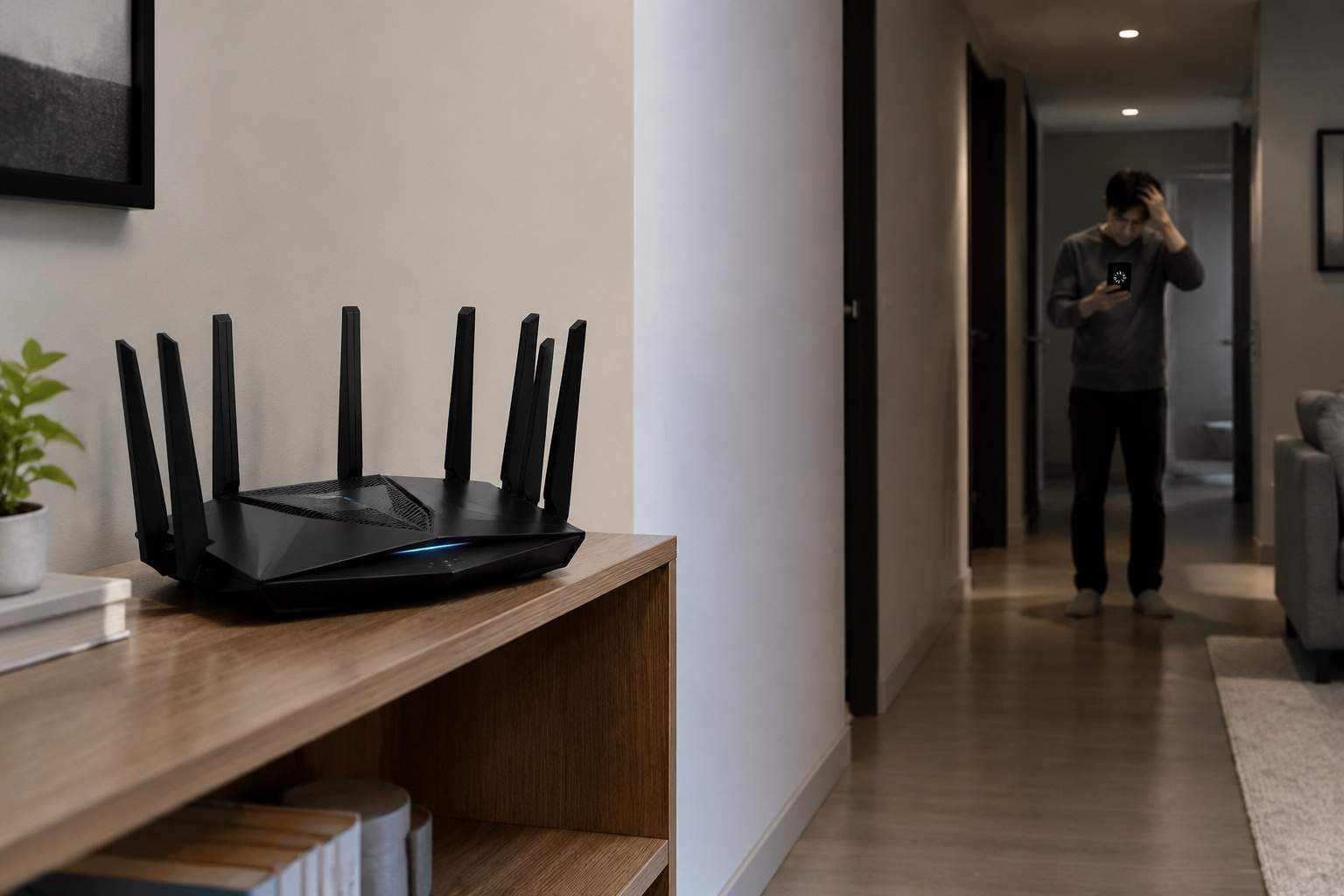
Think about the talk back problem. Imagine a giant with a massive megaphone standing in your living room shouting at you while you are in the bathroom. You can hear him perfectly. But when you try to whisper back he cannot hear a word you say. Your smartphone is that whisperer. It has a tiny battery and even tinier antennas. Even if a flagship Wi-Fi 7 router can blast a signal through three walls your phone does not have the power to send its response back through those same walls. The connection fails because the conversation is one-sided.
We also need to talk about signal attenuation. High-frequency signals like the 5GHz or 6GHz bands used in Wi-Fi 7 are fast but fragile. A single brick wall can cut a 5GHz signal strength by 50 percent. By the time that signal reaches the far end of your home the data rate has dropped from 1200Mbps to a measly 10Mbps. Buying a more expensive router does not change how brick and mortar absorb radio waves. It is like buying a faster Ferrari to drive through a swamp. The car is not the problem but the terrain is.
If you want real efficiency stop looking at single-point flagship routers. A $400 gaming router will almost always be outperformed by a $200 mesh networking kit consisting of two or three nodes. The logic is simple. It is better to have three small lights in different rooms than one giant searchlight in the basement. By placing nodes closer to where you actually use your devices you reduce the physical obstacles the signal must cross.
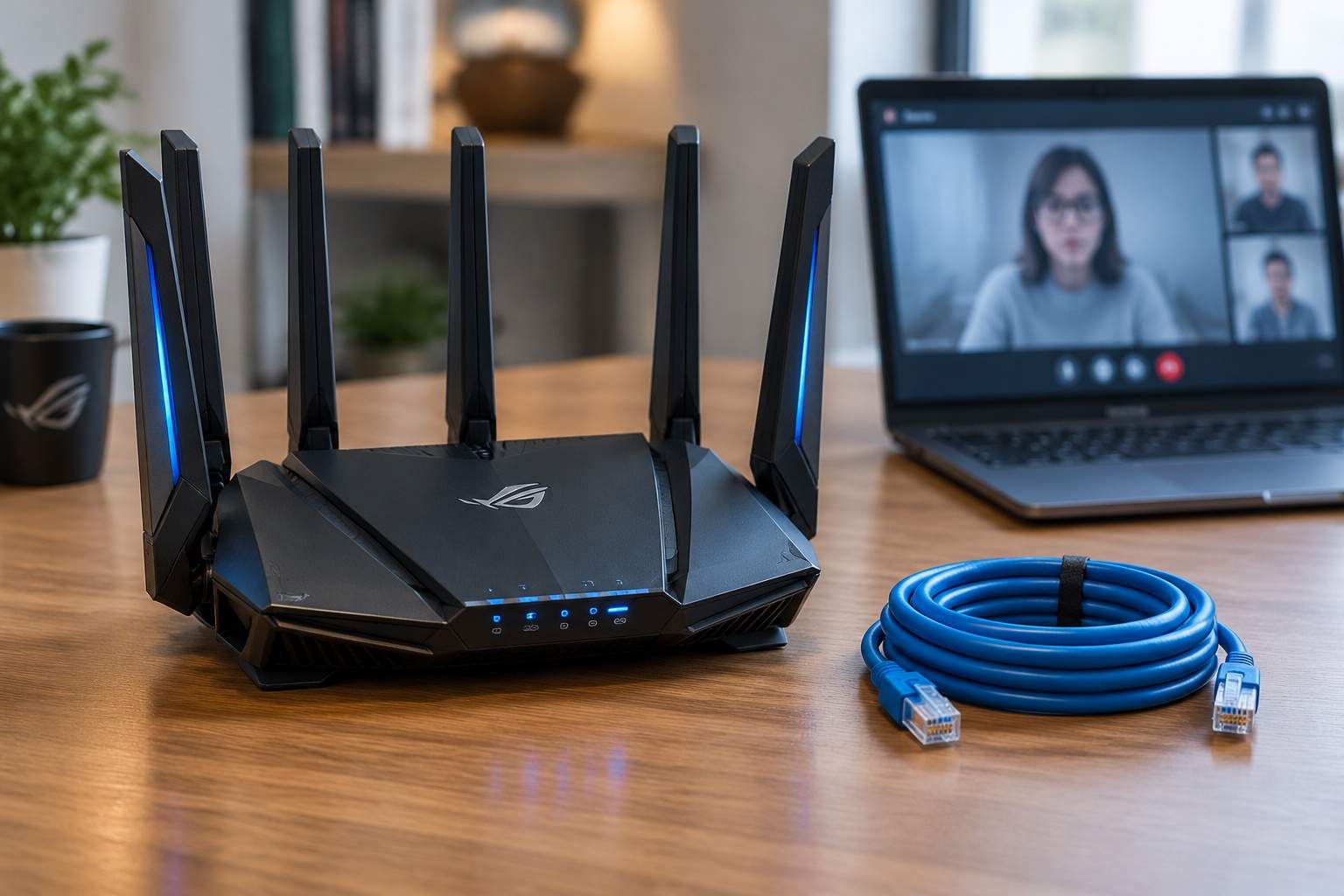
However mesh systems have a trap. If you connect them wirelessly the backhaul uses up your bandwidth just to talk between the nodes. The pro move is using a wired backhaul. Running a twenty-dollar flat ethernet cable to your second node is more effective than spending an extra two hundred dollars on a pro wireless router. Data shows that a wired mesh node maintains 95 percent of your internet speed while a wireless repeater often loses 50 percent immediately.
Gaming routers do have one specific use case which is low-latency processing for competitive players in the same room. They have better processors to handle massive amounts of small data packets without jitter. But for most people that extra processing power is wasted. If your goal is to stop the spinning loading icon while you are lying in bed you need proximity rather than raw power.
Next time you see a router marketed with extreme range and gaming aesthetics look at your walls instead. Invest in a modest mesh system and if possible a few hidden cables. Technology should serve you by being invisible and reliable. A glowing red box with twelve antennas that cannot reach the bathroom is not a tool. It is a monument to inefficient spending.