In the age of Instagram filters and a $76 billion beauty industry, it’s no wonder so many American women find themselves trapped in a cycle of appearance fixation. For a 30-something woman recently shaken by a professional photo, the spiral began with poring over images to judge “ugly” vs. “beautiful” traits—even though she knows looks haven’t hindered her love life or life purpose. This internal conflict is all too familiar: How do we unshackle ourselves from a cultural obsession with physical perfection?
The cultural forces fueling this fixation are impossible to ignore. Americans are bombarded with 4,000–10,000 ads daily, many selling the idea that youth and flawlessness equal worth. A study by the American Psychological Association found that 78% of women feel dissatisfied with their bodies, with media imagery playing a central role. For Gen X and millennial women, this pressure blends with midlife changes—gray hairs, fine lines—that collide with society’s worship of eternal youth. Eleanor’s experience resonates deeply here: When she saw cosmetic surgery before-and-after photos, she felt grief for the “before” women—reminders of her mentors, who were valued for wisdom, not wrinkles. “We don’t evaluate our mothers or teachers on cheekbone height,” she notes, “so why turn that microscope on ourselves?” The paradox lies in how we naturally view others holistically but dissect our own features like projects in need of renovation.
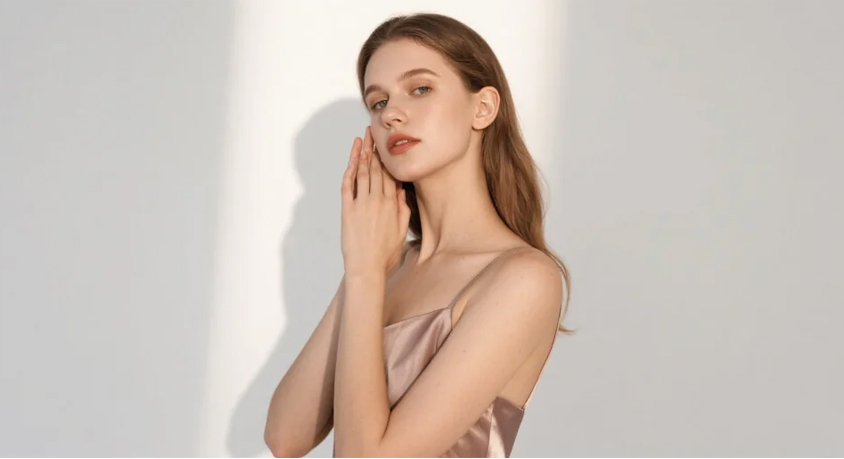
Many notice that appearance obsessions spike during low moods or confidence dips, and there’s the rub. Psychologist Dr. Sarah Vohs explains that focusing on looks becomes a distraction from deeper insecurities: “It’s a tangible ‘problem’ we think we can solve, unlike existential fears about career or relationships.” This is why scrolling through old photos rarely brings closure—you’ll just find new “flaws” tomorrow. A 2023 University of Michigan study found that participants who spent 20 minutes daily on body-focused tasks had 37% higher anxiety levels than those who redirected attention to hobbies. “Busyness with meaningful work is a natural antidote,” says life coach Jen Sincero. “When I’m writing a book or hiking with my dog, I don’t even remember to wonder if my brows are even.”
So how do we start rewiring this thought pattern? Let’s talk practical tools. When the urge to nitpick strikes, try Eleanor’s “smiley sticker” trick—placing a cheerful decal at eye level on your mirror. This simple visual cue disrupts the automatic scan for flaws. For digital triggers, delete problematic photos or use apps to filter beauty content on social media. Another powerful exercise: Next time you look in the mirror, imagine you’re seeing a dear friend. Would you criticize her “saggy” neck or praise her kind eyes? A Harvard Medical School study found that writing a letter to yourself as you would to a struggling sister shifts the tone from harsh to compassionate almost instantly.
Redefining beauty through action is also key. American author Glennon Doyle writes, “The most beautiful people I know are the ones making others feel seen.” Start a small ritual: Each day, note one way you cared for someone or pursued a passion—then link that to your self-worth. Over time, “beauty” becomes about energy, not features. And let’s confront the industry’s lies head-on: The average magazine model is 5’10” and 110 pounds, a body type shared by 0.5% of American women. When you see a “flawless” influencer, remember: Their $500 skincare routine, professional lighting, and photo editing are not reality. A 2024 FTC report found 61% of “before-after” beauty posts use digital alterations—yet many still internalize them as benchmarks.
It’s easy to feel overwhelmed by systemic issues, but personal shifts matter. Take journalist Jia Tolentino, who stopped wearing makeup during the pandemic: “I realized how much mental energy I’d spent on ‘looking presentable.’ Now, my face is just a tool for smiling, frowning, speaking—it’s not a project.” Start with tiny rebellions: Wear that “unflattering” sweater because it’s cozy, skip foundation on Zoom calls, or let gray hairs grow without apology. Each time you choose comfort over conformity, you chip away at the idea that appearance is your primary currency.
As Eleanor puts it, “The women we admire aren’t remembered for their jawlines—they’re remembered for how they made us feel. Let’s be that kind of unforgettable.” In a culture that profits from our insecurities, choosing self-compassion is both a radical act and the first step to liberation. Your worth has always been more than a reflection—start seeing that, and the mirror will never hold the same power again. The journey isn’t about achieving “body positivity” overnight; it’s about unlearning decades of conditioning and embracing the messy, wonderful truth that you are enough, just as you are.