The Great Electric Vehicle Depreciation Disaster
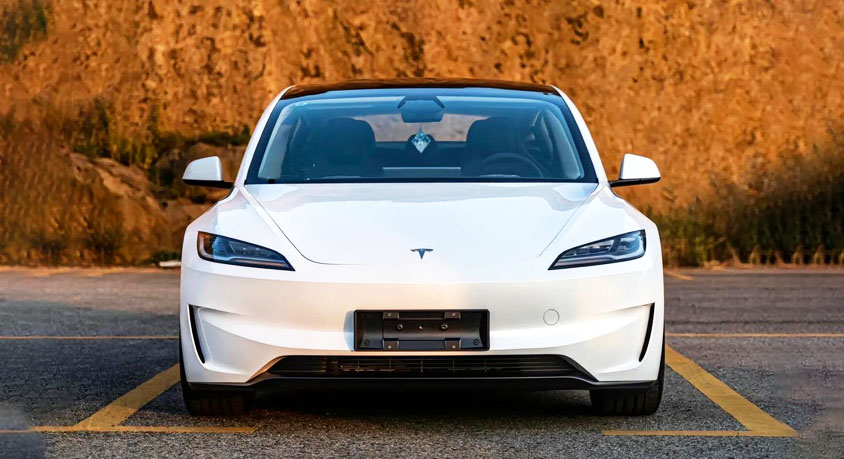
If you bought a new Tesla Model 3 two or three years ago, I sincerely hope you aren’t looking at your trade-in value right now, because it’s a bloodbath. Thanks to Hertz dumping their fleet and Elon Musk’s erratic price-slashing strategy, the used EV market is in a freefall, and the Model 3 is leading the charge straight to the bottom. But your catastrophic financial loss is someone else’s golden opportunity. We are now seeing hordes of off-lease Model 3 Standard Range Plus units hitting the market for under $25,000. For a car that was retailing for nearly fifty grand not long ago, this looks like the deal of the century on paper. But as someone who has dissected thousands of cars, I know that a "cheap" premium car is often the most expensive car you will ever own.
The 100,000-Mile Battery Anxiety Reality Check
The biggest question every single person asks when buying a used EV is: "When is the battery going to die?" Let’s cut through the marketing fluff. Tesla’s NCA (Nickel Cobalt Aluminum) batteries, found in most Long Range and Performance models, are good, but they degrade. If you are looking at a 2020 Model 3 with 80,000 miles, you are not getting the advertised 310 or 322 miles of range. In the real world, after accounting for highway speeds, A/C usage, and degradation, you might be looking at 230 to 250 miles of actual range. Is that enough? For a daily commute to the office and running kids to soccer practice, absolutely. For a 500-mile road trip through Wyoming in winter, it’s a logistical nightmare compared to a hybrid Toyota Camry. You have to buy a used EV based on the worst-case range scenario, not the fantasy number on the dashboard.
Decoding the LFP Battery Gamble
If you find a post-2021 Standard Range model, it likely has a Lithium Iron Phosphate (LFP) battery. These are heavier and less energy-dense, but they are significantly more durable. You can charge an LFP battery to 100% every single day without the degradation issues of the NCA packs. If my goal was a bulletproof, 10-year commuter car for under $25k, I would hunt down an LFP Model 3 and sacrifice that bit of extra range for peace of mind.
The True Cost of a Out-of-Warranty Pack Failure
Here is the logic most people ignore: A remanufactured Tesla battery pack replacement out of warranty will cost you between $13,000 and $16,000. If you buy the car for $22,000 and the pack fails in year two, you have totaled your vehicle. This isn’t like replacing an alternator on a used Honda; it’s a catastrophic financial event. Always, and I mean always, run a full battery health check via the car’s Service Mode before signing the paperwork.
Silicon Valley Build Quality Meets High Mileage
Tesla is not a car company; it's a software company that occasionally builds cars, and it shows in the hardware. I have been in 2018 Model 3s that rattle like a spray paint can. The "vegan leather"—which is just fancy marketing speak for vinyl—on the driver's seat bolster is often cracked or peeling. The suspension bushings are a known weak point and tend to turn into mush after 60,000 miles, leading to a clunky, loose ride that feels nothing like a luxury sedan. Don’t get me started on the lack of a proper instrument cluster. I still hate glancing to the center screen just to see my speed; it's bad ergonomics masquerading as minimalism. These cars don't age as gracefully as a Lexus ES, so you need to adjust your expectations accordingly.
Autopilot, FSD, and the Used Car Software Lottery
A massive trap in the used Tesla market is Full Self-Driving (FSD) capability. A dealership might advertise a car as having FSD to justify a higher price. Here’s the catch: that $12,000 software package sometimes does not stay with the car when it’s sold. It is tied to the original owner's account. I have heard heartbreaking stories of people buying a car expecting FSD, only to find it gone after a software update. Unless you verify via the car’s "Additional Vehicle Information" screen that it explicitly lists "Full Self-Driving Capability: Included" (not "Available"), do not pay a dime extra for it. Treat any used Tesla as if it only has basic Autopilot, which, to be fair, is still better for highway commuting than what you get in most used Fords or Chevys.
Forget the Fuel Savings, Remember the Insurance Bill
Yes, you will save hundreds of dollars a month on gasoline. That’s the "people’s language" version of the efficiency argument. But before you pat yourself on the back, call your insurance agent. Insuring a Tesla is notoriously expensive, largely because they are incredibly easy to "total." Even minor fender benders that would cost $1,500 on a Toyota Corolla can escalate to $15,000 on a Tesla because of the specialized repair sensors, aluminum parts, and the strict collision center certifications. Furthermore, Tesla’s own repair network is legendary for long wait times. If someone hits you in the parking lot at Home Depot, your car could be sitting in a lot waiting for parts for three months. That’s a practical frustration that a standard gasoline car simply doesn't subject you to.
Charging is the Hidden Lifestyle Tax
Are you living in an apartment without the ability to install a Level 2 charger? If so, do not buy a used Tesla, or any EV. Relying solely on the Supercharger network is expensive—approaching the cost of gas in many states—and it's terrible for long-term battery health. A used Model 3 is a phenomenal financial decision if and only if you can plug it in at home every night to a standard 240V outlet, effectively "filling up" while you sleep for pennies on the dollar.