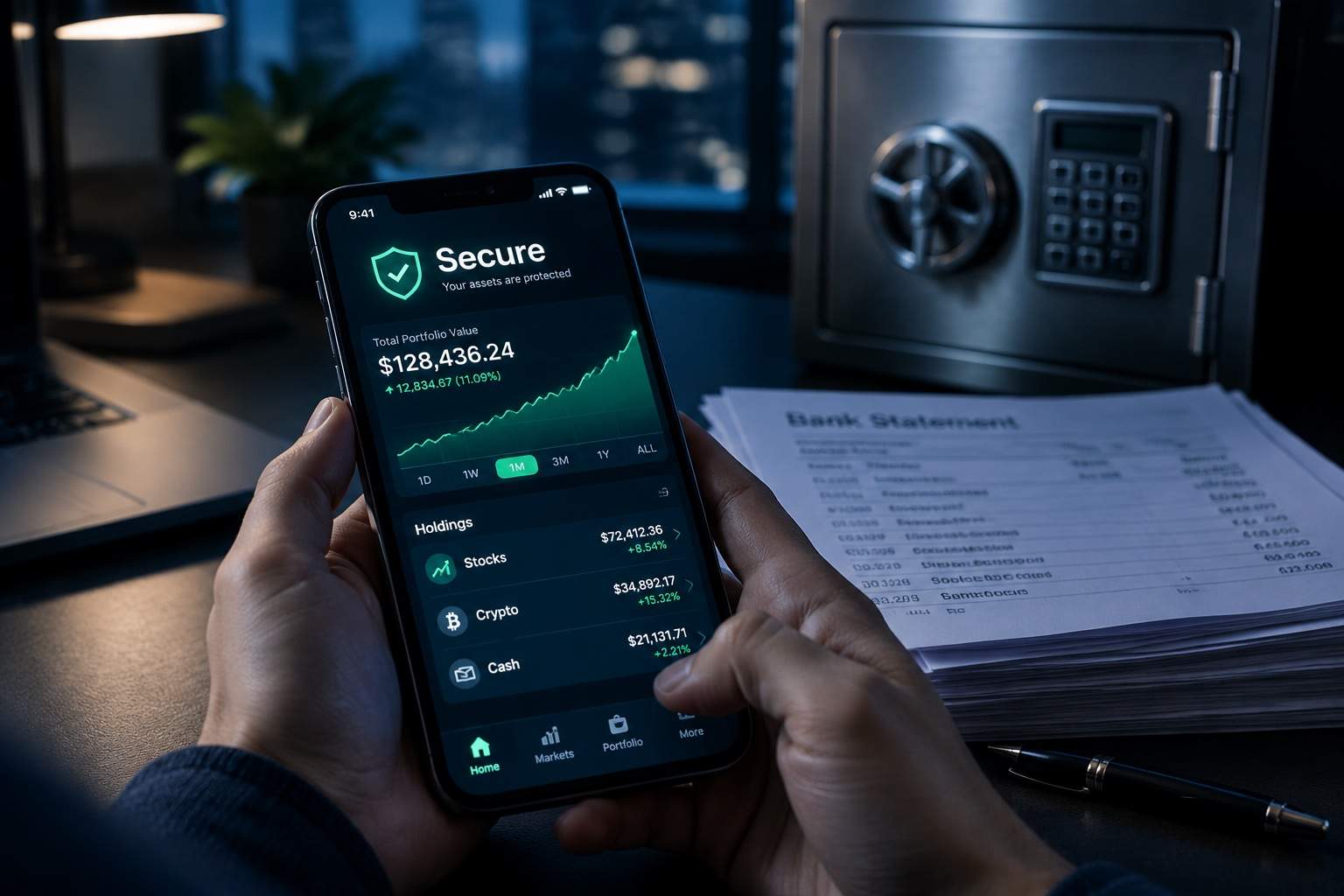
I recently sat across from a man who had done everything the traditional financial world asked of him. He was disciplined, avoided debt like a plague, and maintained a pristine savings account that grew every single month for a decade. He showed me his statements with a mix of pride and profound confusion. While his balance had reached a number he once thought would mean "making it," the three-bedroom home he had been eyeing in his neighborhood had doubled in price. He had more cash than ever, yet he was further from his goal than when he started. This is the paradox of the silent tax on certainty. We are often taught that the highest form of financial wisdom is to avoid risk, but we rarely discuss the risk of avoiding risk.
The Psychological Comfort of the Liquid Balance
There is a deep, primal satisfaction in seeing a large number in a bank account. It represents immediate liquidity, which in turn represents the ability to handle a crisis or seize a sudden opportunity. For many of us, this is the definition of security. Savings serve an essential function in any healthy financial life. They act as the shock absorber for the bumps of reality, such as a sudden job loss or a medical bill. Without this cushion, a person is constantly one bad week away from disaster. I never tell people that saving is a mistake, because for short-term needs and emergency peace of mind, there is no substitute for cash.
Why Zero Risk in Numbers Is Not Zero Risk in Life
The problem arises when we confuse the safety of the nominal number with the safety of what that number can actually buy. If you have a hundred dollars today and you put it under a mattress, you will still have a hundred dollars in ten years. The number hasn't changed, so it feels "safe." However, if the price of bread and fuel has doubled in that time, your hundred dollars has effectively been cut in half. In the world of finance, we call this the real interest rate, which is simply the interest you earn minus the rate of inflation. When inflation sits higher than your bank's interest rate, your "safe" savings are actually leaking value every single day.
The Hidden Weight of Real Interest Rates
We live in an era where the gap between what a bank pays you to hold your money and the rising cost of living is often a negative spread. This is the silent tax. It doesn't appear on a government bill, and no one sends you a notice that you owe it. Instead, it manifests as a slow, creeping erosion of your purchasing power. For a hardworking professional, this creates a sense of treadmill exhaustion. You are running as hard as you can, saving more of your income, but the finish line of financial independence seems to be moving away at the same speed or faster.

The Opportunity Cost of Not Participating in Global Markets
When we choose the absolute certainty of a savings account for our long-term wealth, we are making a conscious choice to opt out of global growth. While companies innovate, expand, and generate profits, the person holding only cash remains a bystander. This is where capital gains and dividends enter the conversation. Investing in the broader economy through stocks or funds is a way to tie your fortune to the productivity of others. It is not a guaranteed path to wealth, and it certainly involves the stomach-churning reality of market volatility, but it is one of the few ways to potentially outpace the rising costs of the world around us.
Balancing the Need for Certainty with Long Term Goals
The challenge is that there is no universal answer for how much cash one should hold versus how much one should expose to the market. I see many people swing from one extreme to the other. They realize their savings are losing value and, in a fit of panic, throw everything into a high-risk investment they don't understand, only to sell at the first sign of a market dip. Both extremes are driven by fear: one by the fear of losing money today, and the other by the fear of being poor tomorrow. True financial judgment comes from identifying which money belongs in which bucket based on when you actually need to spend it.
Asset Allocation as a Tool for Personal Risk Management
Financial instruments like bonds, funds, and stocks are not inherently "better" than savings; they simply serve different purposes. A bond might offer more stability than a stock but less growth potential. A diversified fund might spread your risk across hundreds of companies, reducing the impact if one fails, but it still won't give you the instant access that a checking account provides. The goal of building a portfolio isn't to find a magic bullet that always goes up, but to create a structure where your short-term needs are protected by liquidity while your long-term goals are given the chance to benefit from capital gains.
Redefining Security for a Decade Rather Than a Day
If your primary goal for your money is security, you have to ask yourself what "secure" looks like twenty years from now. Is it the comfort of knowing your bank balance won't fluctuate tomorrow morning, or is it the confidence that you will be able to afford a dignified life two decades from today? The most difficult part of managing money is realizing that the things that make us feel safe in the short term are often the very things that create the most risk in the long term. I still wonder if we are collectively prepared for a future where the traditional "safe" path requires more sacrifice than the one that embraces uncertainty.