There are parts of our bodies that work hard every day without much fanfare—our elbows and knees, for example. They bend and support us through countless movements, from lifting a bag to kneeling to tie a shoe. Yet many people find themselves feeling self-conscious about these areas, noticing they’ve grown darker, rougher, or less smooth over time. This isn’t a sign of poor hygiene or a health problem; it’s often the result of friction, pressure, and everyday wear and tear. The good news is that with a little targeted care—gentle enough to respect the skin’s natural balance—you can help these hardworking areas feel and look smoother. The key is to avoid harsh treatments that might irritate, and instead focus on gentle exfoliation and nourishing moisture.
To understand how to care for elbows and knees, it helps to first look at why they develop that rough, dark appearance. These areas have thicker skin than most parts of the body, with more layers of keratin—the protein that forms the skin’s outer layer. This extra thickness is a natural defense against the constant friction they endure, whether from leaning on a desk, wearing tight sleeves, or kneeling. Over time, dead skin cells can build up on the surface, making the skin look dull or rough. When this buildup mixes with friction, it can also trigger the skin to produce more melanin, the pigment that gives skin its color, leading to darker patches. A 2023 study on body skin texture found that elbows and knees accumulate dead skin cells 2-3 times faster than the thighs or upper arms, which is why they need more targeted exfoliation. Unlike the face, however, these areas can handle slightly more robust care—though “gentle” is still the rule, as overly harsh treatments can cause irritation or even make the problem worse by triggering more friction as the skin tries to repair itself.
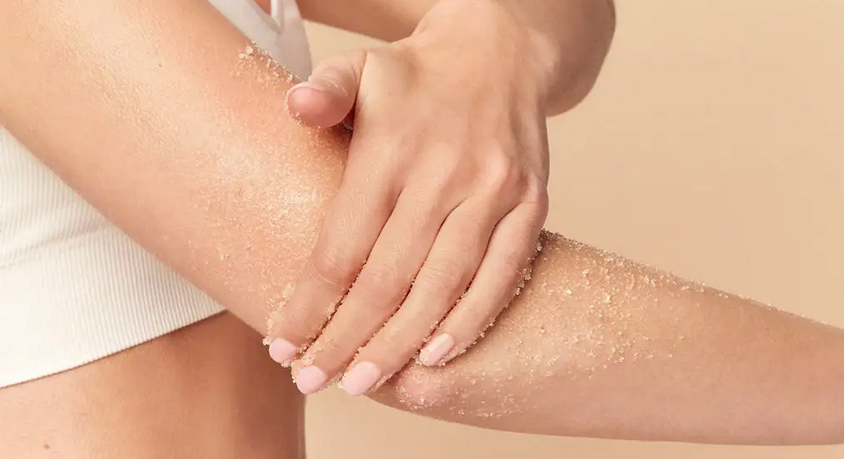
The first step to smoother elbows and knees is gentle exfoliation to remove dead skin cells. But forget harsh scrubs with large, jagged particles—these can create micro-tears in the skin, leading to more roughness over time. Instead, opt for a scrub with lactic acid, a mild alpha-hydroxy acid (AHA) that dissolves dead skin cells without scrubbing. Lactic acid also has the added benefit of drawing moisture into the skin, which helps prevent new buildup. Use the scrub 2-3 times a week, applying a small amount to damp skin. Gently massage the area in circular motions for 30 seconds—don’t press too hard, as the goal is to lift dead skin, not rub the skin raw. For those who prefer a physical exfoliant, a soft exfoliating glove (made of microfiber or cotton) works well when used with a mild body wash. Wet the glove, add a little cleanser, and gently buff the elbows and knees in light, circular motions during your shower. After exfoliating, rinse thoroughly to remove all traces of the scrub or cleanser, as leftover product can cause dryness.
Exfoliation is only half the process—moisturizing right after is crucial to lock in results and protect the newly revealed skin. Elbows and knees have fewer oil glands than other areas, so they need a rich, nourishing moisturizer that can penetrate the thicker skin. Look for formulas with shea butter, which is packed with fatty acids that soften rough patches, or glycerin, a humectant that attracts moisture to the skin. Apply the moisturizer immediately after exfoliating or showering, when the skin is still slightly damp—this helps the product absorb deeper. For extra dry areas, you can even apply a thin layer of moisturizer before bed and cover your elbows with cotton sleeves or your knees with soft socks to lock in hydration overnight. Avoid moisturizers with heavy fragrances, as these can irritate the skin, especially if you’ve just exfoliated. Consistency is key here: even on days you don’t exfoliate, applying moisturizer to your elbows and knees can prevent new dead skin buildup.
Many people notice a difference within a week or two of starting this routine. Take Priya, who’d avoided wearing short sleeves for years because she felt self-conscious about her rough elbows. She started using a lactic acid scrub twice a week and followed with a shea butter moisturizer. “At first, I was worried I’d overdo it, so I went slow,” she said. “After two weeks, I noticed they felt softer, and after a month, the dark patches were lighter. Now I actually forget to think about them when I get dressed—which is such a relief.” Similarly, Marco, who spends a lot of time kneeling while gardening, found that regular exfoliation and moisturizing kept his knees from getting as rough as they used to. “I used to have these hard, dark spots that wouldn’t go away no matter how much I scrubbed,” he explained. “Switching to a gentle scrub and a thick moisturizer made all the difference. They still get a little rough during busy gardening seasons, but it’s easy to fix now.”
Caring for your elbows and knees is a small act of self-care that pays off in how you feel. It’s not about achieving perfection, but about respecting the parts of your body that work so hard. By exfoliating gently and moisturizing consistently, you can help these areas feel smoother and look more even. And when you no longer hesitate to wear that short-sleeved shirt or kneel down without a second thought, you’ll realize that the best part of this routine isn’t just the smoother skin—it’s the confidence that comes with it.