Last winter, Mr. Carter—an 82-year-old with asthma who lives down the street—showed up at my door looking frustrated. In his hands, he held a small, sleek machine: a nebulizer he’d bought online to use at home instead of rushing to the doctor for treatments. “It worked great the first week,” he said, rubbing his chest. “Now it feels like I’m just breathing in air, not the mist that helps my lungs. Did I break it?” I helped him plug it in, and sure enough, the mist was weak and uneven. Later, his respiratory therapist explained the problem: he’d bought an ultrasonic nebulizer, but the medication his doctor prescribed didn’t work well with that type. “I just picked the smallest one—I thought all nebulizers were the same,” Mr. Carter said, sheepish. That’s the mistake so many people make when it comes to home nebulizers: they’re not one-size-fits-all. Whether you’re managing asthma, COPD, or another respiratory condition, choosing the right kind—and keeping it clean—can mean the difference between feeling relief and feeling stuck.
First, let’s break down what a home nebulizer does, in simple terms: it turns liquid respiratory treatments into a fine mist that you breathe in, so the medicine reaches your lungs directly. That’s why they’re so helpful for conditions like asthma (where airways narrow) and COPD (where lungs struggle to move air)—the mist gets to the source of the problem fast. But how they make that mist varies, and that’s what sets the three main types apart: compressed, mesh, and ultrasonic.
Compressed nebulizers are the most common—and for good reason. They work by using a small motor to push compressed air through the liquid, turning it into a steady mist. Think of it like a tiny, quiet air pump: it’s not silent (a soft hum, like a desk fan), but it’s reliable. The American Association for Respiratory Care (AARC) says compressed nebulizers work with nearly all respiratory treatments, making them a safe pick for most people—especially those who use their nebulizer at home every day. Mrs. Lopez, who has COPD and uses hers twice a day, swears by hers. “It’s not the fanciest thing, but it never lets me down,” she said. “I keep it on my kitchen counter, and it’s easy to set up—even with my arthritis.” The only downside? They’re a bit bulkier than other types, so they’re not ideal for travel.
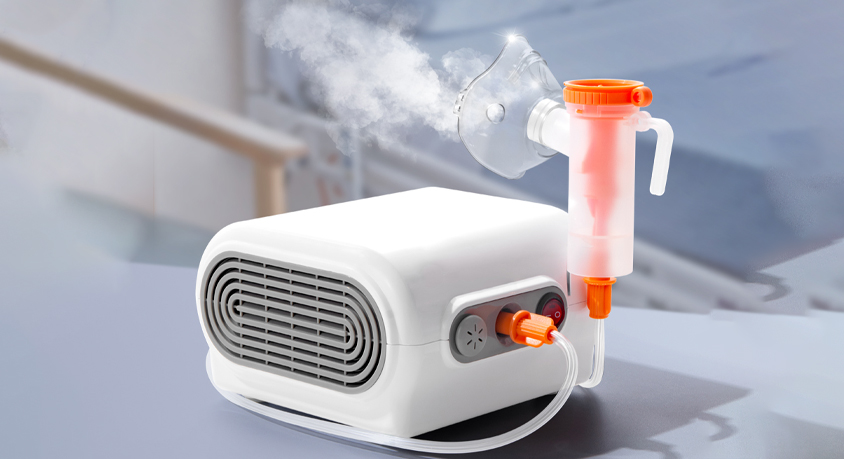
Then there are mesh nebulizers—small, portable ones that are perfect if you’re on the go. Instead of compressed air, they use a thin, vibrating mesh to turn liquid into mist. They’re quiet (you can barely hear them) and lightweight (some fit in a purse or pocket), which makes them great for trips or using outside the home. The AARC notes that mesh nebulizers are also faster—they turn liquid into mist in 5-8 minutes, compared to 10-15 minutes for compressed ones. But there’s a catch: some thicker medications don’t work as well with mesh nebulizers, because the mesh can get clogged. Mr. Torres, who travels to visit his kids every month, uses a mesh nebulizer for his mild asthma. “I used to skip treatments on the road because my old compressed one was too big,” he said. “Now I just toss this in my bag—no more wheezing in the car.” Just make sure to check with your doctor first: if your medication is thick, a mesh nebulizer might not be the best fit.
Ultrasonic nebulizers are the third type, and they’re the ones that trip people up (like Mr. Carter). They use high-frequency sound waves to create mist—fast and quiet, but they have a big limitation: they can’t be used with all medications. Some drugs break down when exposed to those sound waves, making them less effective. The AARC recommends ultrasonic nebulizers mostly for people using simple saline solutions (to moisten dry airways) or certain specific medications—never assume they’ll work with your prescription. “I wish I’d asked my doctor before buying,” Mr. Carter said after switching to a compressed nebulizer. “Now the mist feels strong again, and I don’t have to worry about wasting my medication.”
Once you have the right nebulizer, using it correctly matters just as much as choosing it. The AARC suggests sitting up straight (not slouching) when using it—this helps the mist reach your lower lungs, where it’s needed most. You should also breathe in slowly and deeply through your mouth, holding each breath for 2-3 seconds before exhaling. Mrs. Garcia, who’s had asthma for 20 years, taught me her trick: “I set a timer on my phone for 12 minutes—long enough to finish the treatment, but not so long I get bored. I watch a short video while I breathe, and before I know it, it’s done.” It’s also important to use the right mask size: a mask that’s too small will let mist leak out; too big will be uncomfortable. Most nebulizers come with adult and child sizes, and you can buy replacement masks easily (they’re one of the related products that make maintenance simple).
But the most critical part—one that many people skip—is cleaning and disinfecting. A dirty nebulizer can grow bacteria or mold, which can lead to lung infections. The AARC has simple guidelines: after each use, take apart the mask, tube, and medicine cup. Rinse them with warm water (no soap yet) to remove leftover medication. Then, once a day, wash the parts with mild dish soap and warm water, scrubbing gently with a soft brush (avoid harsh scrubbers that can damage the parts). Rinse well and let them air dry completely—never dry them with a towel, which can leave lint or spread germs. Once a week, disinfect the parts by soaking them in a solution of white vinegar and water (1 part vinegar to 3 parts water) for 30 minutes, then rinse and air dry.