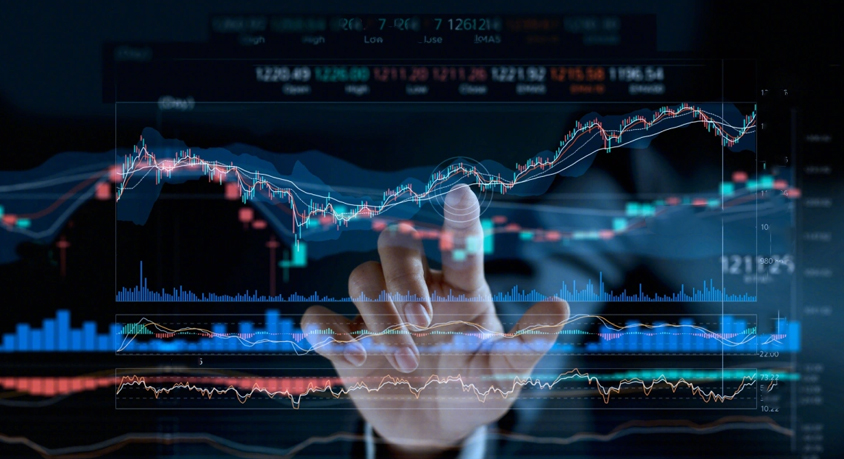
Investing is often framed as a battle of numbers—earnings ratios, growth projections, market indices—but the greatest threat to returns lies not in data, but in human emotion. The cycle of greed and fear, a pattern observed across market cycles for decades, drives even rational people to make the costliest mistake: buying high when optimism peaks and selling low when panic sets in. To understand why this happens, we must first unpack the behavioral logic behind the cycle, then explore how a structured plan can act as a buffer against impulsive decisions.
The greed-fear cycle follows a predictable rhythm, rooted in cognitive biases that shape collective behavior. When markets rise steadily—say, a tech sector rally or a broad index gaining 15% in six months—greed takes hold. Investors see others profiting, fear missing out (a bias known as FOMO), and rush to buy. This pushes prices further above their intrinsic value; historical data shows that retail investors tend to pour the most money into stocks when market valuations are already in the top 20% of historical levels. Conversely, when markets drop—even a 10% correction, a common occurrence—fear dominates. Loss aversion, the psychological tendency to feel losses more acutely than gains, leads investors to sell quickly to avoid further pain. A 2023 analysis of retail trading activity found that investors sold 30% more shares during market dips than during rallies, often locking in losses just before a recovery.

This pattern is not a failing of individual judgment, but a product of how our brains evolved to process risk and reward. In pre-modern contexts, avoiding loss (e.g., fleeing a predator) was a survival instinct; today, that same instinct misfires in markets, where short-term volatility rarely signals a permanent collapse. For example, during the 2020 COVID-19 market crash, the S&P 500 fell 34% in a month. Many investors sold in panic, yet the index recovered its losses within six months. Those who stayed invested or stuck to a pre-set plan saw their portfolios rebound, while those driven by fear missed out on that recovery.
The solution is not to “eliminate” emotions—an impossible task—but to create a structured plan that decouples decisions from momentary mood. A robust investment plan acts as a “cognitive anchor,” grounding choices in pre-defined rules rather than reaction. One effective strategy is dollar-cost averaging: investing a fixed amount at regular intervals (e.g., $300 monthly) regardless of market conditions. This removes the pressure to “time the market”; when prices are high, you buy fewer shares, and when prices are low, you buy more. Over time, this can reduce the impact of volatility on your overall returns. Another key component is defining clear rebalancing triggers: for instance, if your target allocation is 60% stocks and 40% bonds, you rebalance when either asset class deviates by 5% or more. This forces you to sell high (trim overperforming assets) and buy low (add to underperforming ones)—the opposite of emotional behavior.
A critical part of the plan is aligning investments with long-term goals, not short-term market moves. If your goal is retirement in 25 years, a 6-month market dip is irrelevant to your ultimate success; reacting to it would only derail progress. Writing these goals down—along with your plan’s rules—in an investment journal can reinforce discipline; studies in behavioral finance show that documenting decisions reduces the likelihood of impulsive changes.
Emotions will always be part of investing, but they do not have to control outcomes. The greed-fear cycle is predictable, and a structured plan turns that predictability to your advantage. By focusing on process over emotion—on rules that reflect your goals, not the market’s mood—you can avoid the trap of buying high and selling low. The question is not whether emotions will arise, but whether you have a system in place to respond to them rationally.