Standing in a dealership lot, you might find yourself torn: a Mercedes-Benz A-Class with its sleek badge and soft leather seats, or a Honda Accord Touring with heated seats, a panoramic sunroof, and adaptive cruise control—both priced within a few thousand dollars of each other. This is the “entry-level luxury” dilemma: the allure of a high-end brand versus the practicality of a well-equipped non-luxury car. For many drivers, the badge feels like a milestone—a sign of “making it”—but the decision goes far beyond aesthetics. To choose wisely, you need to unpack the tradeoffs: brand value versus configuration, maintenance costs versus long-term reliability, and resale value versus upfront value. This isn’t a choice between “good” and “bad”; it’s a choice between what matters most to your lifestyle and budget.
Brand value is the biggest draw of entry-level luxury, and it’s not just about prestige. Luxury automakers like Mercedes-Benz, BMW, and Audi invest heavily in tactile quality—think door handles that click with precision, infotainment systems that respond instantly, and cabin materials that muffle road noise better than most non-luxury cars. A 2024 JD Power Interior Quality Study found that entry-level luxury models have 30% fewer fit-and-finish issues (like loose trim or uneven panel gaps) than non-luxury top trims. There’s also the intangible: the feeling of being part of a brand’s legacy, and the perks that come with it—like free loaner cars during service or exclusive owner events. For example, BMW X1 owners get access to BMW’s “DriveNow” subscription service at a discounted rate, a benefit no non-luxury brand currently offers. But brand value has limits: the A-Class shares some mechanical components with the Mercedes-Benz GLA SUV, and it lacks the performance upgrades (like adaptive suspension) that define higher-end Mercedes models. It’s like buying a designer tote bag—you get the logo and craftsmanship, but not the premium features of the brand’s flagship line.

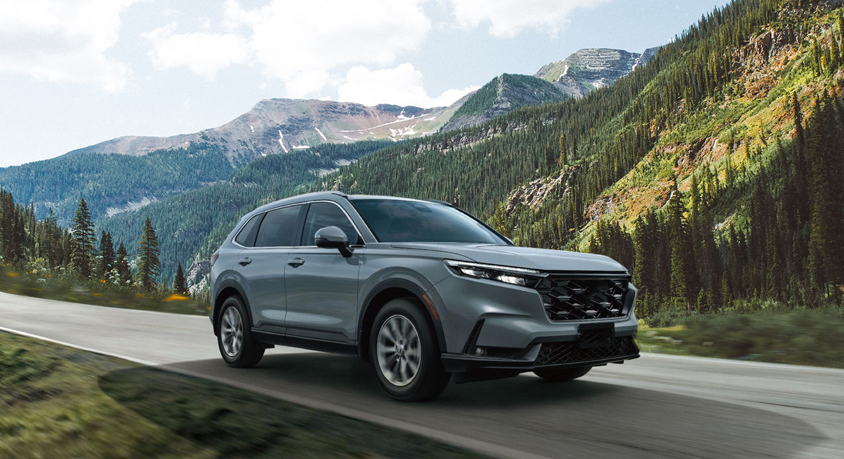
Configuration is where non-luxury top trims often pull ahead. Entry-level luxury cars typically come with basic features as standard—leatherette seats, a 10-inch infotainment screen, and lane-keeping assist—but anything extra (like a premium sound system or 360-degree cameras) requires expensive packages. A Mercedes-Benz A-Class with the “Premium Package” (which adds heated seats and a larger touchscreen) costs $3,200 extra, pushing its base price from $34,500 to $37,700. By contrast, a Honda Accord Touring ($38,000) comes with those features as standard, plus adaptive cruise control, a head-up display, and a wireless charging pad—all without add-ons. The gap widens with performance: a BMW X1’s base engine makes 241 horsepower, which is competitive, but it doesn’t offer all-wheel drive as standard (that’s a $2,000 upgrade). A Toyota RAV4 Limited ($36,500) includes all-wheel drive, a hybrid powertrain option, and a power liftgate—features that would cost $5,000+ to add to the X1. For drivers who value “more for your money,” non-luxury top trims deliver; for those who prioritize brand over bells and whistles, entry-level luxury makes sense.
Maintenance costs are the hidden wildcard of entry-level luxury. Luxury cars use specialized parts and require dealer service, which drives up costs. A 2025 AAA Auto Maintenance Study found that the average annual maintenance cost for an entry-level luxury car (like the Audi A3) is $1,200—40% higher than the average for a non-luxury top trim (like the Mazda 3 Premium, which costs $850 a year). Oil changes are a prime example: a Mercedes-Benz A-Class oil change costs $150–$200 at a dealership, compared to $80–$120 at a local shop for a Honda Accord. Repairs are even more costly: a replacement infotainment screen for a BMW X1 costs $1,800, while a similar screen for a Toyota RAV4 costs $900. These costs add up over time: over 5 years, you’ll spend roughly $1,750 more on maintenance for an entry-level luxury car than a non-luxury top trim. That said, luxury brands often offer longer warranties: Mercedes-Benz includes a 4-year/50,000-mile warranty, while Honda offers 3-year/36,000 miles. For drivers who keep their cars for 3 years or less, the warranty can offset some costs; for those who hold onto cars longer, the maintenance gap grows.
Resale value adds another layer of complexity. Historically, luxury brands held value better, but that’s changing. Kelley Blue Book’s 2024 Resale Value Report found that entry-level luxury models retain 52% of their value after 3 years, while top-trim non-luxury cars retain 55%. The BMW X1, for example, has a 3-year resale value of $18,500 (from a $35,600 base price), while a Toyota RAV4 Limited retains $20,175 (from a $36,500 base price). Why the shift? Non-luxury brands have improved quality, and their lower maintenance costs make them more attractive to used-car buyers. Exceptions exist—Lexus entry models (like the UX) still retain 58% of their value—but most mainstream luxury brands now trail top non-luxury trims. For drivers who trade cars every 2–3 years, the difference is small ($1,000–$1,500), but for those who keep cars 5+ years, non-luxury models pull ahead by $3,000 or more.
At the end of the day, the choice depends on your priorities. If you value the tactile quality of a luxury brand, the perks of dealer service, and the pride of a premium badge, an entry-level model like the Mercedes-Benz A-Class or BMW X1 will satisfy. If you want maximum features for your budget, lower long-term maintenance costs, and stronger resale value, a top-trim non-luxury car like the Honda Accord Touring or Toyota RAV4 Limited is the smarter pick. There’s no “right” answer—only what fits your life. Whether that means a sleek luxury badge or a loaded non-luxury model, the best choice is the one that aligns with your needs, not just the allure of a name.