The soles of my boots crunched against a mixture of damp cedar needles and grey shale as the sound of the Pacific began to drown out my own heavy breathing. I was clinging to a gnarled hemlock root, looking down a steep embankment where the mist met the surf, when I saw it: a single, weathered rope swing hanging from a massive Sitka spruce, swaying lazily over the sand. There were no neon signs, no line of influencers waiting for their "perfect" shot, and certainly no $25 cocktails being served in a coconut. My boyfriend grabbed my hand, grinning through the sweat, and said, "Forget Bali, I think we just found the edge of the world." That’s the thing about Mystic Beach near Sooke; it doesn't give itself to you easily, but once you navigate the roots and the mud, it makes every polished resort beach look like a cheap imitation.
Most tourists land in Victoria and think they’ve "seen the island" after a tea service and a stroll through Butchart Gardens, which is essentially paying $40 to look at flowers you can’t touch. We bypassed the afternoon tea traps, rented a beat-up SUV for about $65 a day, and drove ninety minutes west into the real wilderness. The drive along the West Coast Road is a winding lesson in why you shouldn't trust GPS arrival times—between the logging trucks and the sections of road that look like they’re being reclaimed by the forest, you learn to measure distance in breaths, not miles. We stayed in a small guesthouse in Sooke for $110 a night, which is a fraction of the cost of the "harbor-view" suites in the city, and our host gave us the best advice of the trip: "The ocean doesn't care about your outfit, so wear wool and bring a headlamp."
Stepping onto the Juan de Fuca Trail at the China Beach trailhead felt like entering a cathedral built of moss. The hike to Mystic Beach is roughly two kilometers, but it’s a terrain of suspension bridges and slippery boardwalks that demand you pay attention to your feet rather than your phone. We encountered a group of students coming back up the trail, their leggings caked in mud, laughing about a "close encounter" with a very indifferent slug. One of them warned us, "The swing is empty now, but watch the tide—she's a hungry one today." That’s a free tip you won't find on a brochure: the "dreamy" swing experience evaporates if you don't check the tide tables, as the Pacific has a habit of swallowing the beach whole twice a day.
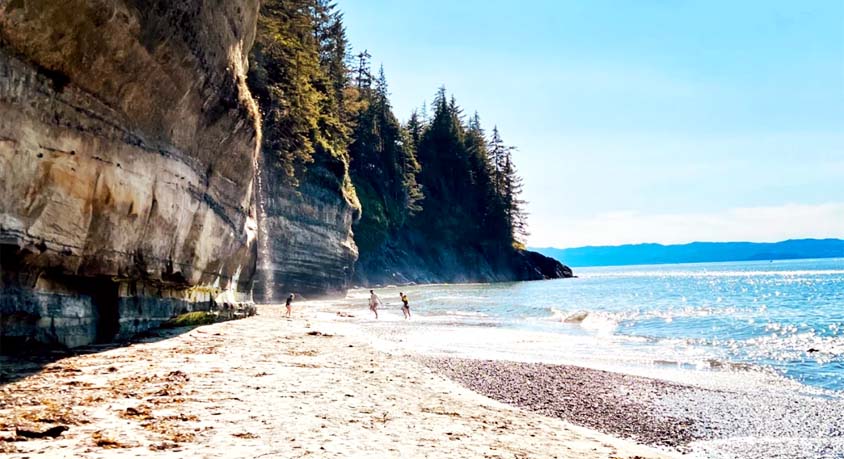
When we finally hit the sand, the scale of the place hit me like a physical weight. To our left, a waterfall cascaded directly from the forest cliffs onto the beach—a sight people pay thousands to see in Hawaii, yet here we were, the only souls in sight for at least twenty minutes. I sat on that log swing, my feet dangling over the saltwater, and realized the "cost" of this experience was just the calories burned and the gas in the tank. We spent the afternoon exploring the sea caves carved into the sandstone cliffs, where the water has worn the rock into smooth, alien shapes. Unlike the high-end "cave tours" offered in Southeast Asia that involve life jackets and 50 other people in orange vests, here you just walk in, keep an ear out for the tide, and enjoy the eerie silence for zero dollars.
Eating in Sooke is where you can really flex your budget if you avoid the places with "View" in the name. We found a small smokehouse where the brisket was served on butcher paper and the locals were arguing about the best fishing lures. For about $15, I had a meal that made the fancy bistro dinners in Victoria feel like overpriced airline food. We also hit up a local bakery at 7:00 AM for "day-old" sourdough and cheese rolls that were still better than anything in a Vancouver supermarket. This is the "hidden" cost-benefit of reverse tourism: you’re not paying for the marketing or the prime real estate; you’re paying for the ingredients and the person who actually made them.
Visiting during the shoulder season between September and October is a tactical masterstroke, provided you don't mind a bit of "liquid sunshine." The forest is at its most fragrant then, a heavy scent of decomposing leaves and salt spray that clears your lungs better than any spa treatment. We noticed the crowds had vanished, leaving us with the "expensive" views all to ourselves. Just remember that the "Mystic" part of the name comes from the fog that can roll in within minutes; we were walking back when the trees disappeared into a grey wall, and I was glad I wasn't in my "beach sandals." We passed a couple in pristine white sneakers looking devastated by a mud puddle, and I couldn't help but smirk—this isn't a catwalk, it’s a coastline.
By the time we got back to the car, my fingers were cold and my hair was a tangled mess of salt, but I felt more "luxury" than if I’d spent a grand on a spa day. We had traded the curated, predictable sights for a rugged, honest piece of the coast that didn't ask for a tip or a reservation. If you want to see the Island without the pretension, skip the harbor and head for the swing; just make sure your boots are waterproof and your sense of wonder is intact.