The heavy iron key turned with a reluctant groan, and as the massive wooden door swung open, the scent of parched earth and blooming jasmine hit me all at once. I was standing in a dim, cavernous hallway in San Miguel de Allende, having wandered away from the main square to avoid a wedding parade. A woman in a paint-splattered apron waved me toward a hidden courtyard where three local artists were arguing over a half-finished sculpture while drinking espresso. There was no entrance fee, no "Authorized Personnel Only" sign, and certainly no crowds of spring breakers screaming for tequila shots. In that orange-hued courtyard, filtered through the shadows of 18th-century arches, I realized that the Mexico I’d been sold in travel brochures—all turquoise water and buffet lines—was nothing but a glossy distraction from this layered, living masterpiece.
While most of my friends were bleeding money at all-inclusive resorts in Cancun, paying $400 a night to sit in a plastic chair, I settled into a renovated 17th-century guesthouse just six blocks from the Parroquia for $110. San Miguel has this reputation for being an expensive enclave for American retirees, but that’s a half-truth designed by people who never leave the five-star hotel zone. We skipped the "boutique" hotels that charge Manhattan prices and found a place where the floor tiles were hand-painted and the water pressure was a suggestion rather than a guarantee. It didn't matter; the rooftop terrace gave us a view of the entire valley for the price of a mid-range Marriott in a suburban office park.
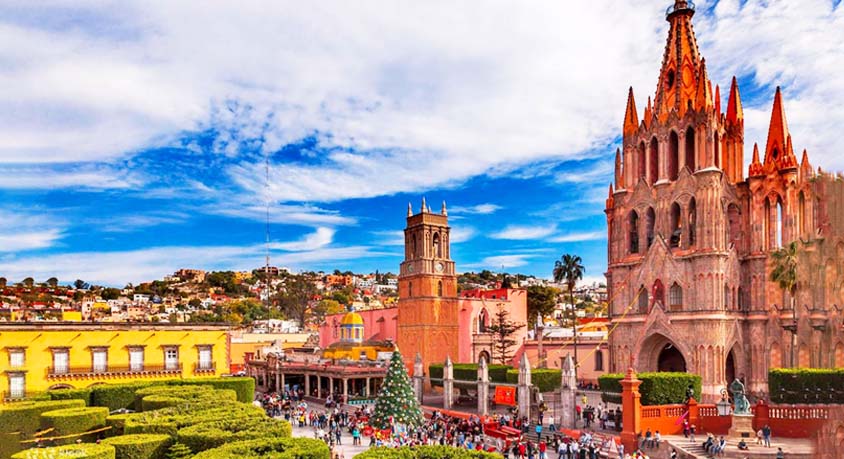
Walking these cobblestone streets is a contact sport for your ankles, but it’s the only way to realize that this town essentially functions without a single traffic light. Instead of the chaotic honking of Mexico City, there is a rhythmic clatter of shoes on stone and the occasional low rumble of a local bus. We ignored the $15 taxi rides being pushed on tourists at the bus station and simply walked everywhere. The city is a vertical maze, and while your calves will burn, you’ll stumble into places like the Fábrica La Aurora—a former textile mill turned into an art collective. Most people pay for guided "Art Tours" that cost $60, but we just pushed open the heavy gates ourselves for free, spending three hours watching world-class painters work in silence.
Lunch at the Mercado Ignacio Ramírez provided the ultimate reality check for our travel budget. While the fancy rooftop bars near the plaza were charging $22 for "artisan tacos," we found a stand inside the market where a grandmotherly woman was slapping fresh masa onto a grill. Two gorditas stuffed with chicharrón prensado and a glass of fresh agua de jamaica cost us exactly $5. The difference between the "tourist price" and the "local reality" here is about a 400% markup, and all you have to do to bridge that gap is follow the smell of charred corn and sit on a plastic stool. If you’re paying more than $10 for lunch in this town, you’re not paying for the food; you’re paying for the English-speaking waiter’s smile.
We spent a sunset at El Charco del Ingenio, a botanical garden and nature preserve on the edge of town that most tourists completely ignore because it involves a steep uphill trek. For a $3 entry fee, we walked along the edge of a dramatic canyon filled with rare cacti that looked like something out of a Dr. Seuss book. It was a stark contrast to the manicured, sterile parks of the hotel zones elsewhere. Later, we found the "Public Library" (Biblioteca Pública), which sounds boring until you realize it houses some of the most stunning murals in the country and a quiet courtyard where you can escape the heat for the price of a small donation.
Getting here from the US is the only real "cost" barrier, as you usually have to fly into León (BJX) or Querétaro (QRO) and then catch a shuttle. From Los Angeles or Dallas, the flight is roughly three to four hours, but the overland shuttle can add another ninety minutes of bumpy highway travel. We traveled during the shoulder season in late spring, which meant we dodged the suffocating crowds of the winter festivals but still caught the violet explosion of the Jacaranda trees. The prices for shuttles are fixed, usually around $30 per person, but you can cut that in half by taking the luxury "Primera Plus" buses—they have more legroom than a first-class flight and cost about $12.
San Miguel de Allende is a place that punishes the hurried and rewards the curious who are willing to get a little lost. It’s a town that proves you don’t need a beach to find paradise, just a sturdy pair of shoes and the sense to avoid any restaurant that has a menu translated into four languages.