The engine of the water taxi sputtered and died, leaving us in a silence so heavy it felt like the humidity was actually pressing against my eardrums. I was slumped on a wooden bench inside a narrow, covered boat, watching a basilisk lizard—the "Jesus Christ lizard"—literally sprint across the surface of the coffee-colored canal. My neck was slick with a cocktail of sweat and 40% DEET, and my brother was currently reconsidering his life choices as he stared at the wall of impenetrable green jungle flanking us. We had been traveling since 5:00 AM, swapping a comfortable shuttle for this damp canal trek, all to reach a village in Costa Rica that is effectively an island made of mud and dreams. There are no cars in Tortuguero; if you want to move, you paddle, or you walk until the sand swallows your shoes. I checked my watch, realized we were still two hours from anything resembling a bed, and smiled because the lack of a road meant the gift-shop-and-zipline crowd was currently stuck three hundred miles behind us.
Sliding a kayak into the black water at 3:00 AM feels less like a vacation and more like a tactical insertion into a world that doesn't particularly want you there. My guide, a local named Ernesto who seemed to be able to see in total darkness, whispered for me to keep my paddle low. "The jaguar likes the water’s edge when it’s this quiet," he murmured, his voice barely audible over the rhythmic clicking of insects. We weren't in one of those "eco-parks" near San Jose where the animals are practically on a payroll; we were in a flooded forest where the eyes reflecting my headlamp belonged to caimans who had been there since the Mesozoic. We paddled for two hours into the deep lagoons of Tortuguero National Park, the primary-growth forest closing in until the canopy blocked out the stars. It cost us $35 for the three-hour tour, a fraction of what those "Adventure Resorts" charge for a sanitized hike, and the adrenaline of hearing a heavy splash just ten feet away was entirely free.
Staying in the village itself, rather than the isolated "eco-lodges" across the canal, is the only way to avoid the captive-audience pricing that ruins most jungle trips. Our guesthouse, a brightly painted wooden box with a noisy ceiling fan and a view of the village's single dirt path, was $55 a night—a staggering contrast to the $400-a-night lodges that include "all-inclusive" meals that usually consist of lukewarm buffet pasta. We spent our evenings at a roadside "soda," a tiny family-run kitchen, where I ordered a Casado—a mountain of rice, beans, plantains, and grilled fish—for about $8. I watched a group of tourists from the high-end lodges get dropped off by boat, pay $20 for a "tropical cocktail," and then get hustled back to their resort before they could even talk to a local. If you want the jungle to feel real, you have to be willing to eat where the boat captains eat.
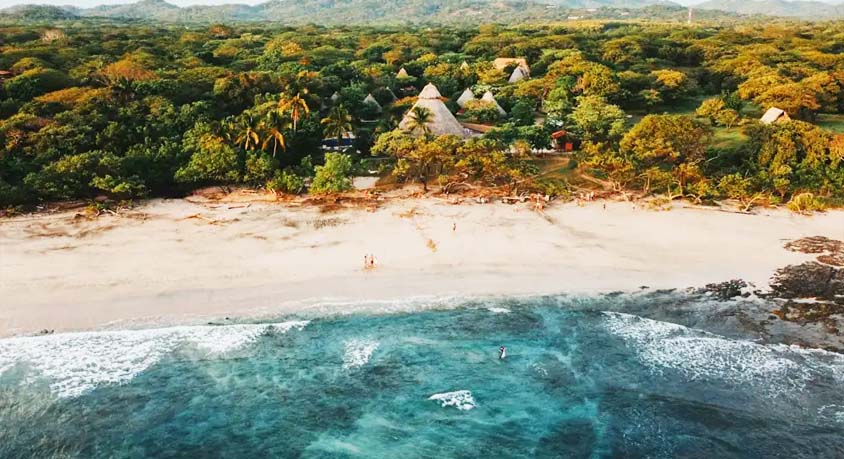
Walking along the black volcanic beach at midnight, we were led by a park ranger who treated the sand like a sacred cathedral. It was nesting season for the Green Sea Turtles, and the rules were strict: no white lights, no cameras, no sudden movements. We waited in the dark until the ranger signaled us forward to see a three-hundred-pound dinosaur-like creature laboriously digging her nest. The cost of the permit was about $15, plus the guide fee, making it one of the most affordable world-class wildlife encounters on the planet. I heard a woman behind me whisper to her husband that she was "disappointed" she couldn't take a flash photo for her Instagram; I wanted to tell her that the sight of a prehistoric beast returning to the exact spot she was born is a memory that doesn't need a filter, but the ranger’s glare did the talking for me.
Navigating the transit from the States to this swampy paradise is a lesson in patience that most travel blogs gloss over. You fly into San Jose, which is easy enough, but then you have to catch a public bus to Cariari and then a boat from La Pavona. Total travel time from San Francisco was nearly twenty hours, and the "terminal" at La Pavona is essentially a roof over some dirt where you wait for the water levels to be high enough for the boats to move. There are no "hidden fees" if you take the public boat, which is about $10, but the private water taxis will quote you $50 the second they see your designer luggage. Keep your bag small, keep it waterproof, and keep your expectations for a "smooth ride" nonexistent.
We spent an afternoon exploring the "backstreets" of the village, which consist of narrow concrete paths where the children play soccer and the laundry hangs like colorful flags between the palms. We discovered a tiny, unmarked path leading to the "Turtle Conservatory" museum, which costs $2 to enter and offers a gritty, unpolished look at the history of turtle poaching and the village's turn toward conservation. It’s a tiny room filled with hand-drawn posters and old shells, providing more cultural weight than any high-tech visitor center I’ve seen in the bigger cities. Most tourists miss it because they’re too busy looking for a place that serves a vanilla latte.
If you come during the rainy season—which, let’s be honest, is most of the time in a "rainforest"—bring a poncho that looks like it could survive a car wash. The downpours here aren't the gentle mists of a Seattle morning; they are vertical oceans that turn the village paths into streams within minutes. We visited during the peak nesting months of August and September, when the humidity is a physical weight but the chance of seeing a leatherback or green turtle is almost 100%. The prices for guesthouses stay remarkably flat because the barrier to entry (that six-hour boat ride) naturally culls the casual crowds.